Hire an Architectural Photographer — FAQ
I photograph architecture for design firms, landscape architects, developers, and project teams, working nationally from a base in St. Louis. If you have questions about process, cost, licensing, or what to expect, they're answered below. To start a project, request an estimate.
Working together
What is your process for planning and executing a shoot?
I start with a virtual meeting to understand your goals and review your renderings and existing imagery. I then schedule a site visit to build the shot list and create a schedule. The site visit and the shot list are the two planning steps that matter most, and they inform each other. On shoot day I work the plan systematically while staying responsive to what the building offers.How far in advance should we book?
Two to four weeks is ideal, mostly so we can do the necessary pre-production work. I can move faster when a deadline requires it. For exteriors that depend on foliage, snow, or a specific sun angle, booking earlier is better.What do you need from us before the shoot?
Renderings, floor plans, and reference photos, plus a briefed on-site contact who can authorize access and control the lighting. I mark up the floor plans with shot locations and fields of view, so we both see exactly what is covered before shoot day. The more documentation up front, the less guesswork on site.How do you make sure the photos represent our vision?
In our first conversation I ask what makes the project important to your practice and which elements matter most. I assess your marketing goals and research the building beforehand to understand its context and narrative. On site I shoot to that brief, whether the priority is materiality, lighting, site relationships, or how people use the space.Why do you ask how we plan to use the images?
Because end use shapes how I think about what I’m shooting. For example, social means looser framing for square crops. Matching renderings means composing for a 16x9 ratio and leaving room for it. Different award categories emphasize different things. Knowing the destination before the shoot means the images arrive ready for it.
Cost and licensing
How much does architectural photography cost?
Fees depend on four things: the scope of the project, how many final images you need, how you intend to use them, and location. A single hero interior is a different assignment than a multi-building campus, and images licensed for advertising have different terms than website-only use. Send your project details and I will put together an estimate.What is included in your fee?
The shoot, planning and scouting, standard post-production on your selected images, one round of review, and a license for your firm's own marketing use. Travel time is included. Airfare and lodging outside my home markets are billed at cost.Do you require a deposit, and when is the balance due?
Yes. A deposit is payable to Esto before scheduling or any work begins, and it applies to your final invoice. The balance is due on delivery of the images, on net 30 terms.Who owns the photographs?
I retain copyright, which is standard when you hire an independent photographer. You receive a license that defines exactly how your firm can use the images. Think of it as licensing software: you have full right to use it as agreed, without owning the underlying work.What usage rights do we receive?
A non-transferable license for your firm's own marketing, publicity, awards submissions, and design-related social media, in North America, with no expiration. A credit line, © Serhii Chrucky/Esto, is required wherever the images appear. The license covers your practice, not third parties.Can our consultants, engineers, or other project partners use the images?
Yes, and bringing them in early works in your favor. The developer, general contractor, landscape architect, interior designer, furniture dealer, and engineers may all want images. Including everyone from the start lowers the cost for each party. Any inquiries from consultants, suppliers, or owners go through Esto for licensing.Do you allow cost-sharing among project partners?
Yes, and it is the most efficient way to photograph a project that several firms want to use. The full cost can be shared across the parties who need the images.How does cost-sharing work?
The commissioning client is billed the full amount and collects each partner's share. Additional participants can be added within three months of the invoice, each with their own license and a participant fee. After that window, standard licensing applies. Coordinating and collecting from the partners falls to the commissioning client, which is how the group earns the savings.Can the product manufacturers on the project license the images?
Yes. Manufacturers and suppliers whose products appear in a project often license images for their own marketing, handled as a separate license. If a manufacturer reaches out after seeing your project, send them to Esto and we will set it up.Can we license images you've already photographed of a project?
Yes. If I have already shot a building, those images can be licensed through Esto. Reach out with the project and I will point you to the right licensing path. This comes up often with manufacturers and project partners who find an existing image of a building they were involved in.Can we use the images for awards submissions and publications?
Yes. Your license covers awards submissions and your own publicity and editorial use of the project. When an outside publication wants to license the images directly, that runs through Esto at standard editorial rates. A credit line is required wherever the images appear. For design competition entries, include Esto's release form with your submission.Does standard licensing cover advertising?
No. Advertising is a different animal. It requires property and model releases and extended licensing, and it follows industry standards for permission and fees. Standard licensing covers marketing, publicity, awards, and editorial. If an ad campaign is in the picture, tell me up front so we can quote it.Can we use the images to train AI or generate new images?
No. The license prohibits using the images, or any related video, to train or generate new images with AI or machine learning tools, or letting a third party do so. They stay what they are: photographs of your project.
Deliverables and turnaround
What deliverables do we receive?
Proof images within one to two weeks of the shoot. You review, make selections, and send notes. Standard post-production is included, with one round of review. Final high-resolution JPGs are delivered for print, web, and social.How many final images will we get?
We agree on a ballpark number during planning, based on the project's scope and the shot list. A focused single-space shoot yields a smaller set than a full building or campus. Additional images beyond the agreed count are available at a per-image rate.What's included in post-production, and how much retouching do you do?
Standard post-production is included on every selected image: color, tone, and exposure, vertical and perspective correction, and basic cleanup like exit signs, cables, debris, and small distractions. More involved retouching, such as removing larger objects, vehicles, and so on, is available for a fee.What file formats do you deliver?
High-resolution JPGs, which cover print, web, and social, are the standard. Exotic output formats can also be accommodated. I do not deliver unprocessed files.What's your turnaround time?
Preliminary images within one to two weeks of the shoot. After you make selections, finals follow within about three weeks, roughly a week for every ten images. If you're against a hard deadline, tell me up front and I'll work out an expedited schedule.
On site and logistics
How long does a shoot take?
A single space can take a few hours. A full building or campus often runs a full day or more. The shot list and the light required set the schedule. I would rather get the right light on the right elevation than race through a list.Do you photograph occupied or in-use buildings?
Yes. Much of this work happens in active spaces, and I shoot around use without disrupting it. We plan timing in advance so the building reads the way you want, whether that means full of people or empty.Does the project need to be finished before you shoot?
Yes, finished, not almost finished. Construction complete, and trailers, dumpsters, scaffolding, fencing, and temporary signage gone. Cleanup in post is possible to a point, but it should never be the plan.What needs to be ready before you arrive?
Interiors clean, furnished, and styled: artwork hung, surfaces wiped, windows washed, shades working, clutter cleared. Exteriors with landscaping complete and maintained, and no maintenance crews scheduled that day. I refine staging on site, but everything you want in frame has to be there.When is the best time of year to shoot?
It depends on the building's orientation and its landscape. The sun angle shifts across seasons, and a north-facing facade may only get full light for part of the year. Mature trees can hide a view in summer that sits wide open in winter, and new plantings sometimes need a season or two to fill in. When timing matters, we plan it well ahead.What happens if it rains?
We set a rain date for exteriors from the outset and watch the forecast together. Interiors can usually proceed in overcast or light rain. Severe or unsafe weather means we postpone. Some weather is worth chasing: a building in fresh snow can be the best image of the project, with planning and patience.What is your cancellation or rescheduling policy?
We build flexibility into the schedule and plan a rain date for exteriors, and I make the weather call. Postponements happen, and I would rather move a day than deliver a compromised shot. Once a shoot day is confirmed, though, the day is held for you, so a cancellation or postponement can carry a cancellation fee along with any expenses already committed. Rescheduling an out-of-town shoot can add cost. Your deposit holds the date and applies to your final invoice.Are you comfortable directing people in the frame?
Working with models or occupants is often essential to showing how a project functions. During planning we decide where people strengthen the narrative and to what degree.Are you insured? Can you provide a certificate of insurance?
I carry liability insurance and provide a COI when a site requires one. Some venues demand specific coverage levels on short notice, so flag any site insurance requirements early.
Capabilities and services
Do you offer architectural video?
No, I only shoot stills. For clients I work with regularly I'll sometimes include a few drone clips, but video is not a service I offer. To be frank, I’m not very good at it! When a project needs video, I can bring in another Esto photographer who specializes in it.Do you offer drone and aerial photography?
I am FAA Part 107 certified and shoot aerial and elevated views where they serve the project, whether that is a site plan reading, a roofscape, or a context shot that ground level cannot reach. Some sites require drone authorization, which I handle as part of planning.Do you shoot twilight and dusk exteriors?
Yes. Twilight is a narrow window, 30 to 40 minutes, and the light moves fast, so interior lighting control and site access have to be arranged in advance. With a plan, we either run variations on one idea or lock a single composition and nail it.Do you photograph both interiors and exteriors?
Yes, and I treat them as one continuous reading of a project. Many shoots cover both, with the balance set by what the project is about.Do you photograph landscape architecture and site design?
Frequently, and it is a deliberate strength rather than an add-on. I read building and landscape together, which matters for projects where the site work and the architecture are inseparable.Do you offer 3D tours or Matterport?
Those are real estate tools, and I don't do real estate work. My focus is on interpretive architectural photography for design firms.Can you provide large-format prints for our office or lobby?
Yes. I've produced lobby and office prints before, through a professional lab. Every print job is custom, so reach out and I'll quote it.Do you photograph headshots, events, or other commercial work?
That's not a service I offer. My work is exclusively architecture. For firms I already work with I'll occasionally accommodate something small as a courtesy, but it isn't on the menu.What types of projects do you photograph?
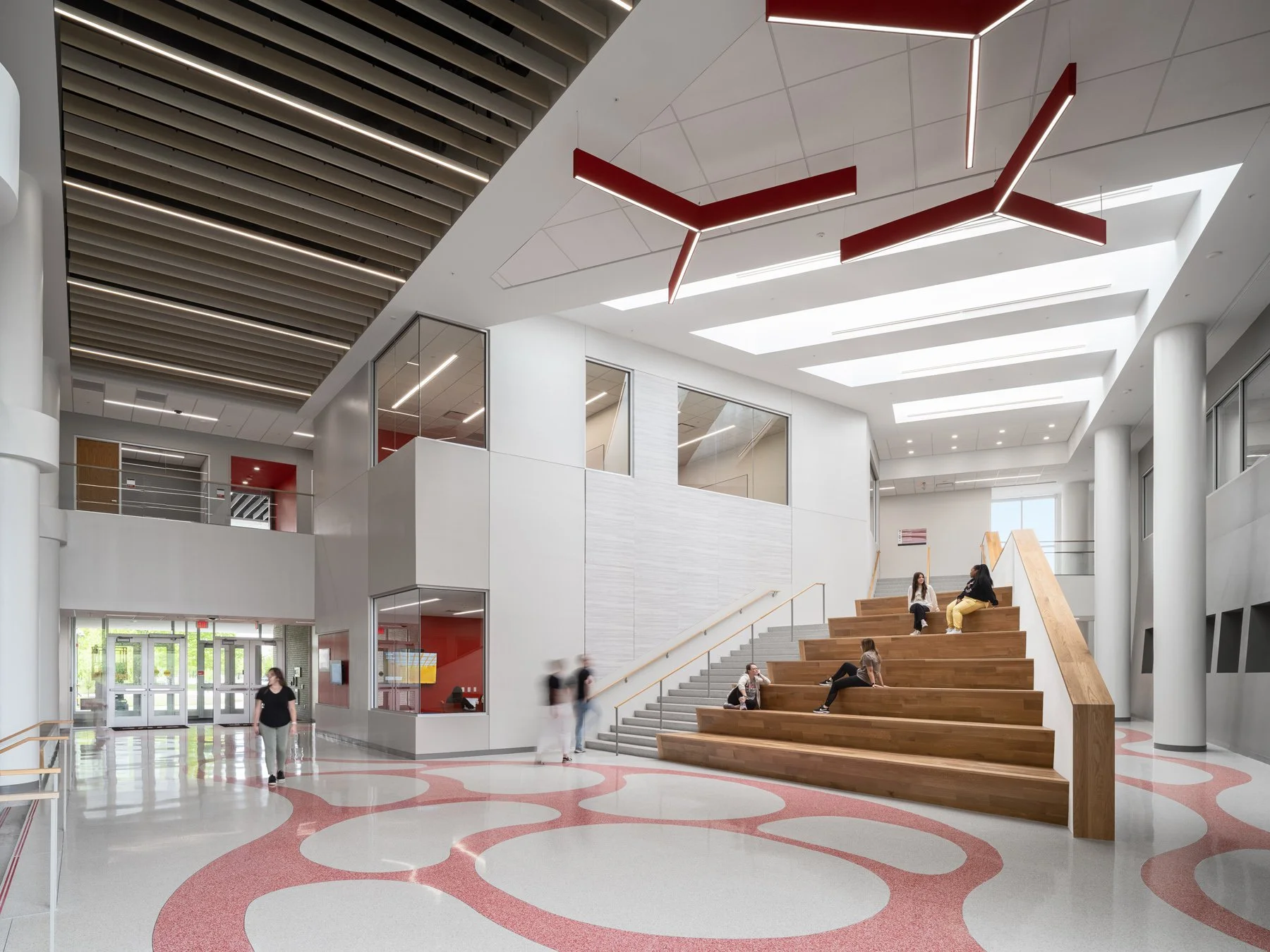
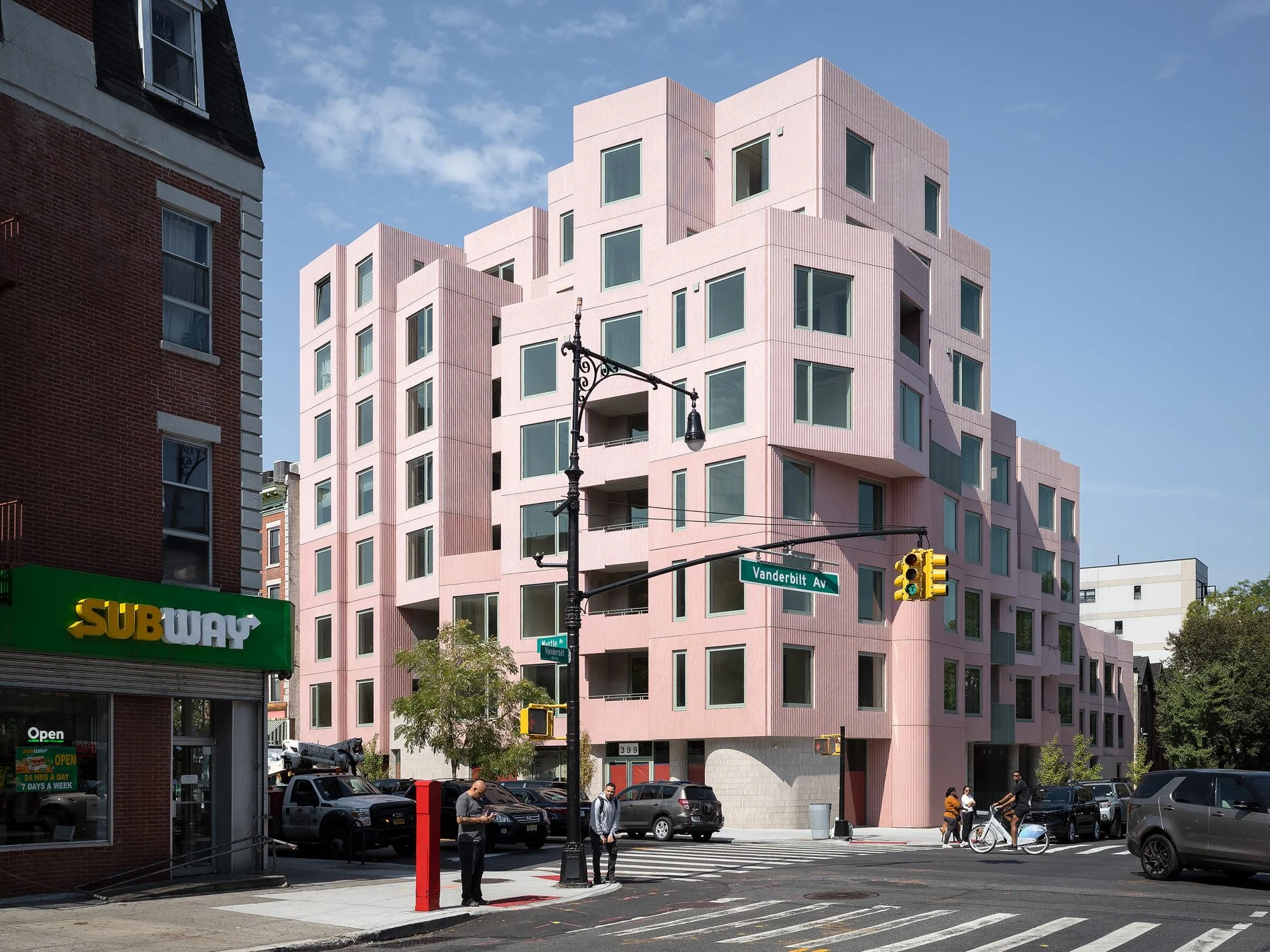
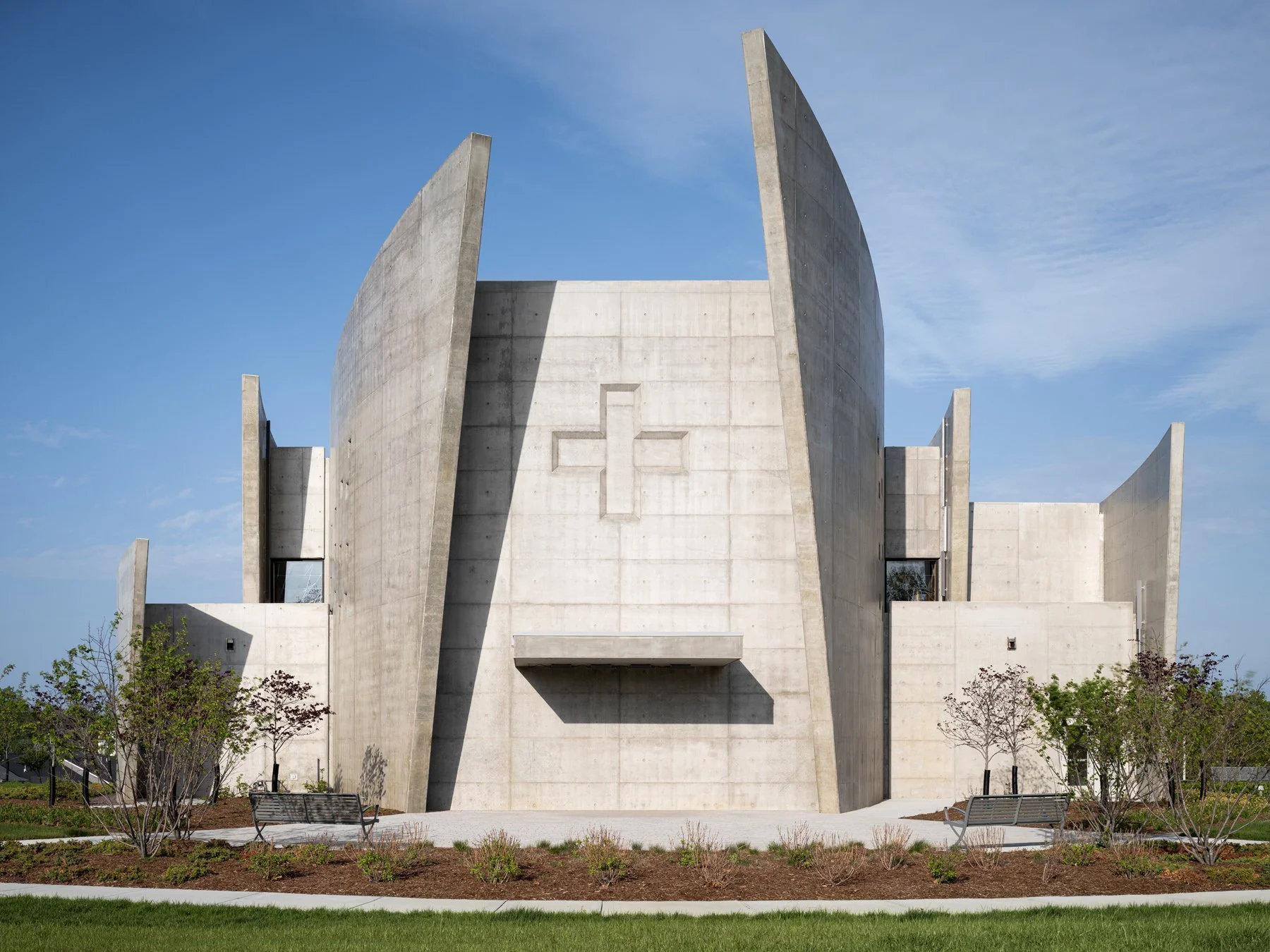
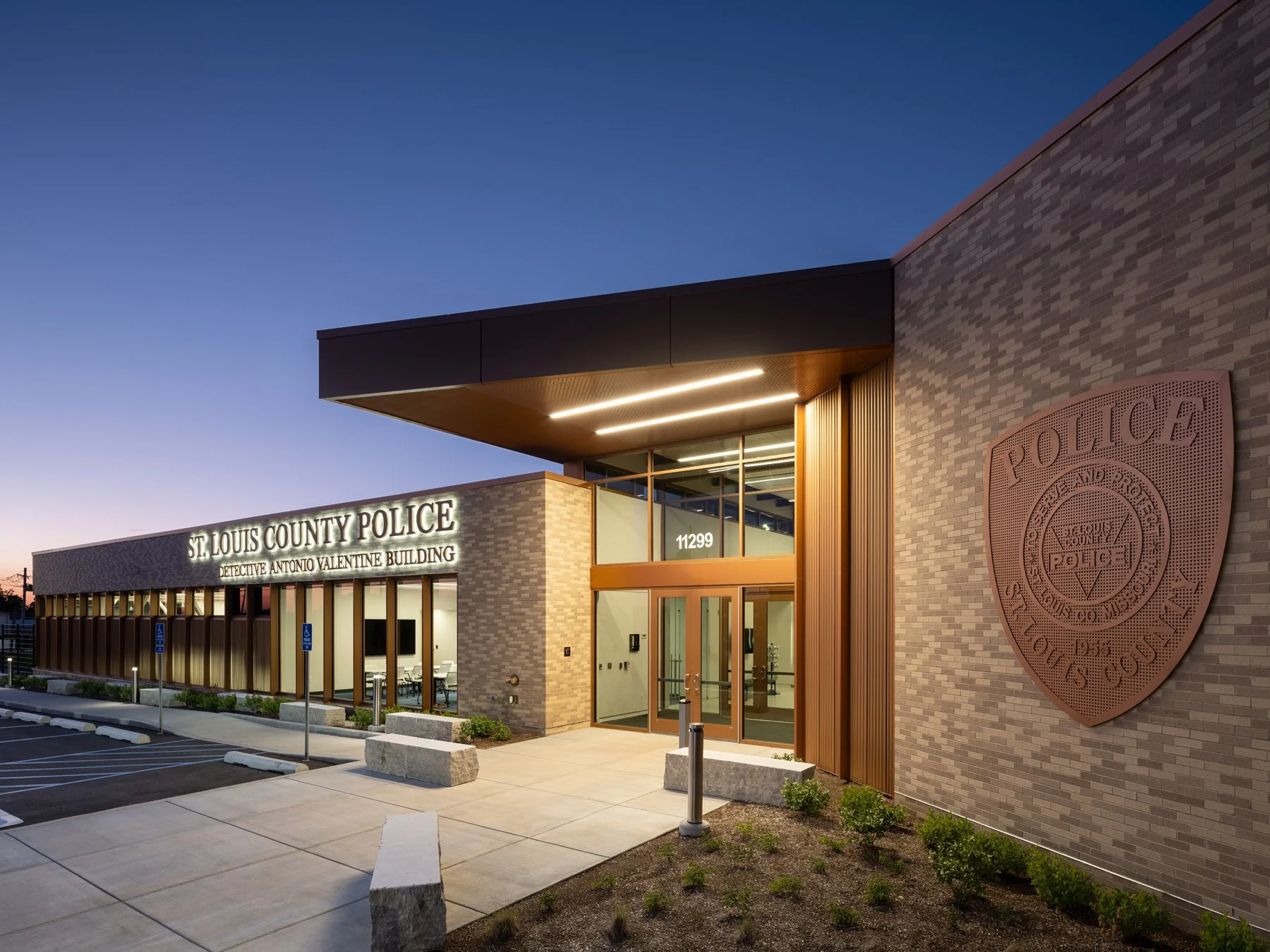
While I can successfully photograph any aspect of the built environment, most of my work is in the educational, civic, cultural, adaptive reuse, landscape architecture, and multi-unit residential sectors.
Who I work with
Do you work with developers, contractors, and other firms, or only architects?
The whole design and development team. Architects, landscape architects, interior designers, engineers, developers, and contractors all commission and license this work.Can you handle confidential or pre-launch projects, or sign an NDA?
Yes, this is common. Confidentiality is built into how I work, and Esto's agreement includes a confidentiality clause. For confidential or pre-launch work, we agree up front on access, timing, and when the images can appear in my portfolio, so nothing surfaces before you're ready.Do you work with homeowners, or only firms?
I work with design firms and solo practitioners, not homeowners or real estate agents. If you're after listing photography, that's a different specialty with different aims, and not what I do.What's the difference between architectural and real estate photography?
In short, they serve different goals. Real estate photography moves a listing. Architectural photography documents design intent and builds a firm's marketing, awards, and publication record. I do the latter.
Location and travel
Where are you based, and do you charge for travel?
I am based in St. Louis and work nationally, with home markets in St. Louis and Chicago. I bill for all vehicular mileage, but do not charge any additional fee for travel days. I bill airfare and lodging at cost on projects outside those markets.Do you only work in the Midwest, or will you travel for a project?
The Midwest is home, not a boundary. I'm based in St. Louis and work nationally, traveling regularly for projects. Tell me where the building is and we'll sort out the logistics.How does travel work for out-of-town projects?
I bill airfare and lodging at cost for work outside my home markets. Where it makes sense, I'll try to batch nearby shoots or time travel efficiently to keep costs reasonable, so the earlier we plan the better.