James R. Thompson Center: Photos Before the Renovation
I was born in 1985. So was the Thompson Center. When I made these photographs in 2018, the two of us were 33 and still unrenovated. Though, I didn't think about it that way at the time. There's a feeling of vertigo in looking back at your own pictures of a place that no longer exists the way you knew it. But I still have the sense memory of being there in person. The James R. Thompson Center I photographed is gone. These are some of the last pictures of it as it was, and may it live on.
I made these images before the organized fight to save the building got underway. There was a feeling at the time that the State would soon vacate the building and sell it. And if that happened, it was probably going to be demolished. I thought it would be prudent to document it. When that fight came, Preservation Chicago used these images to make its case, naming the building to its 2020 Most Endangered list. The building was not, in the end, torn down. Playing even a minor role in that has been one of the proudest moments of my career.
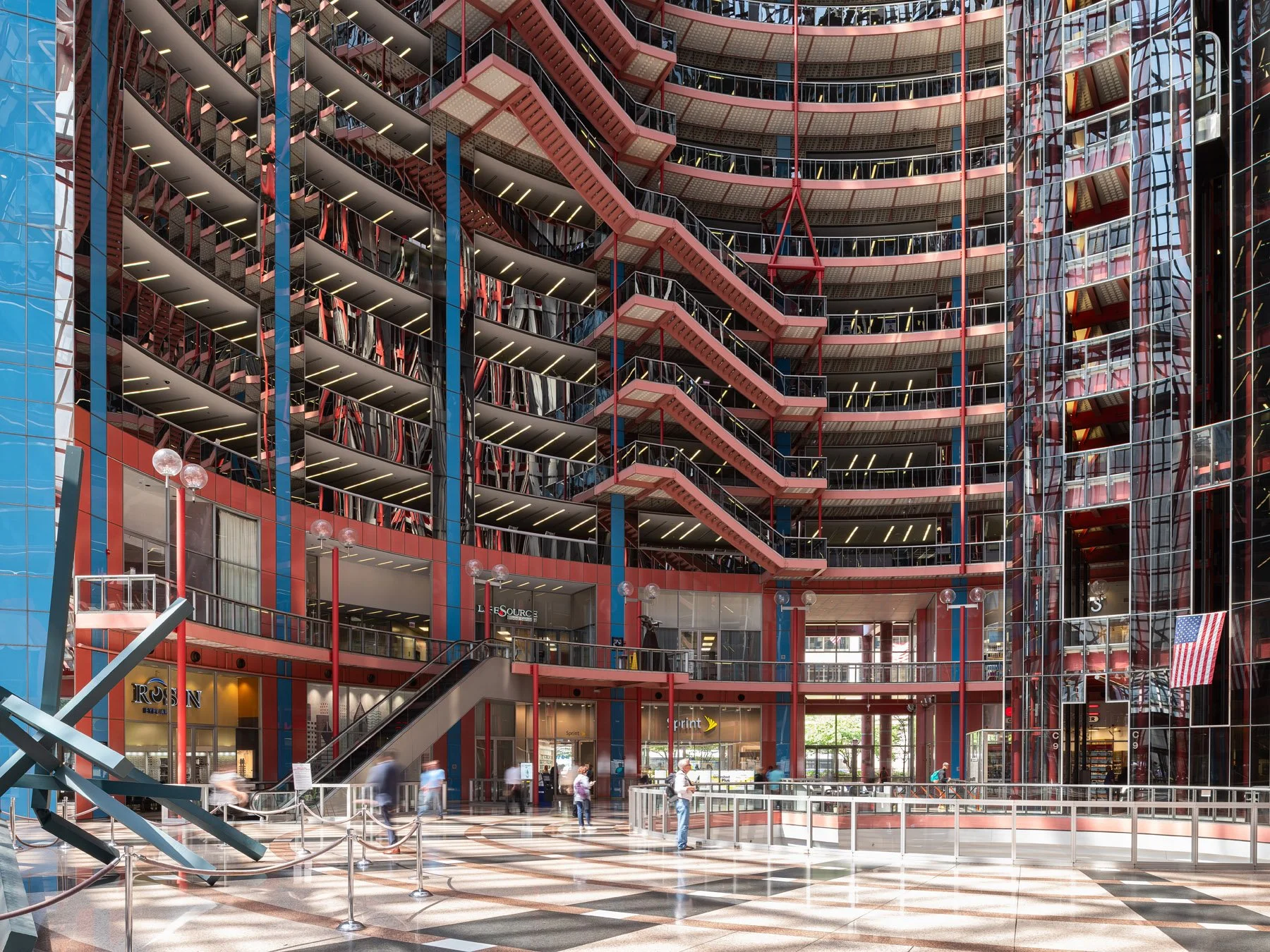
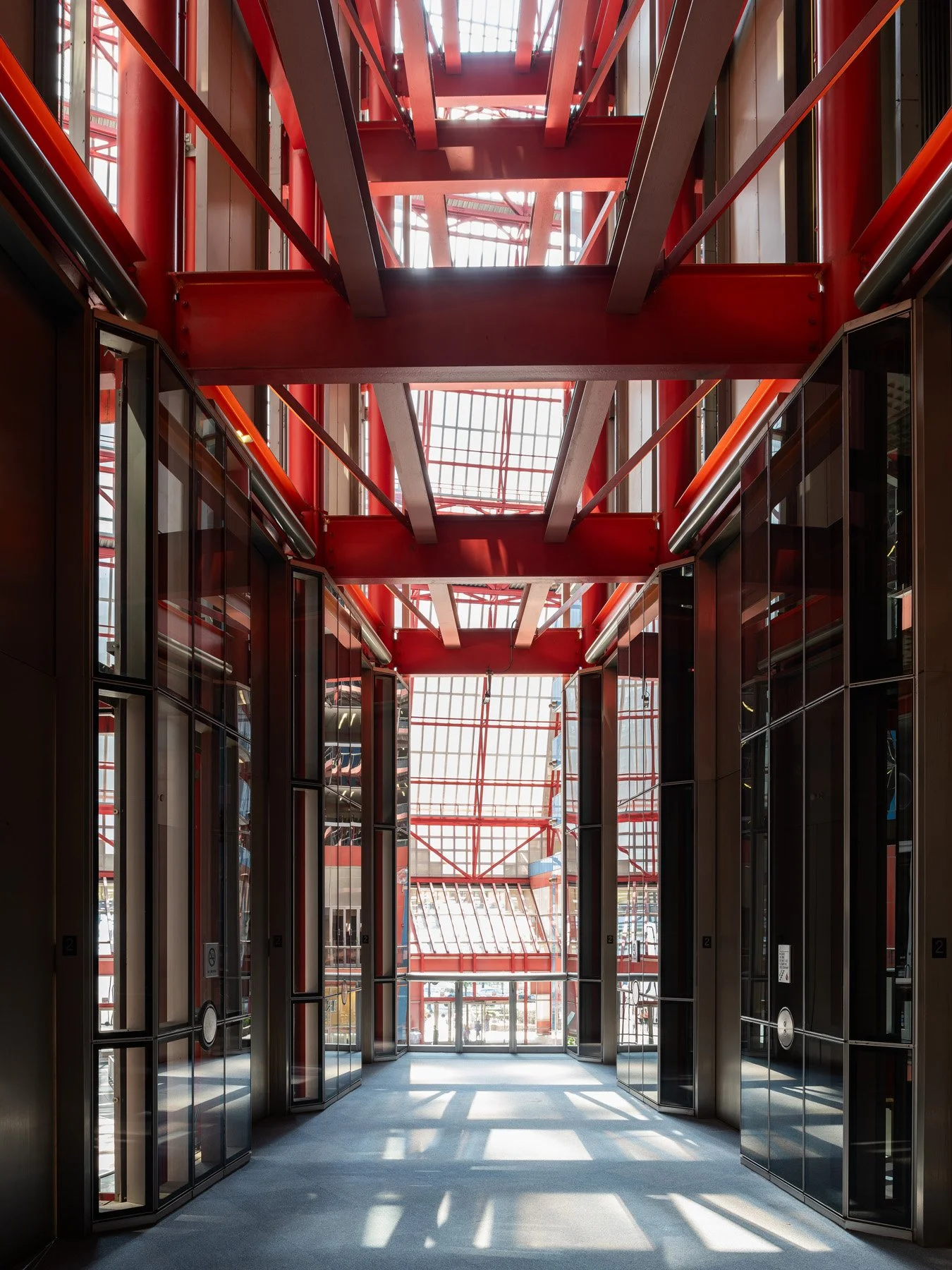
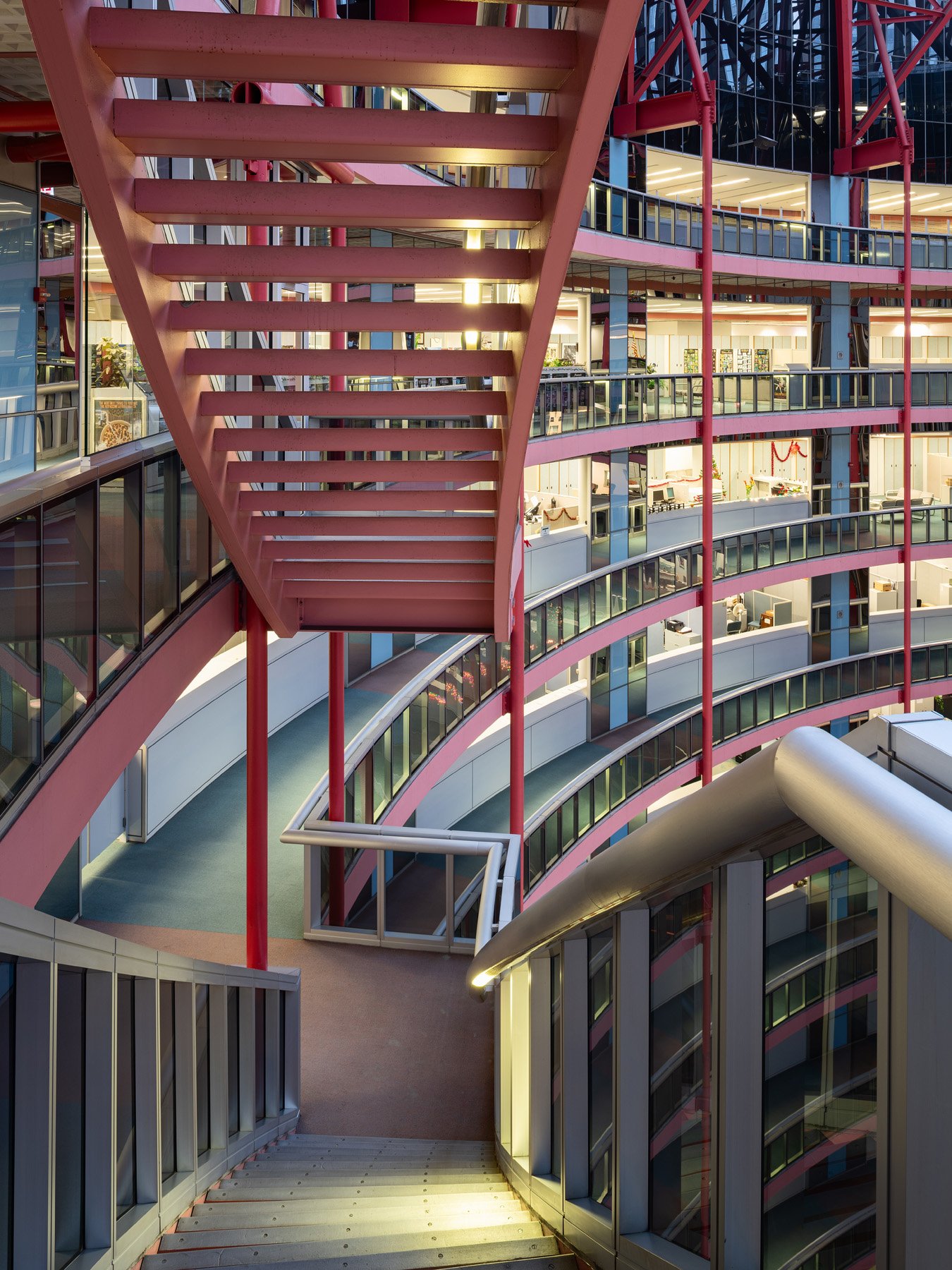
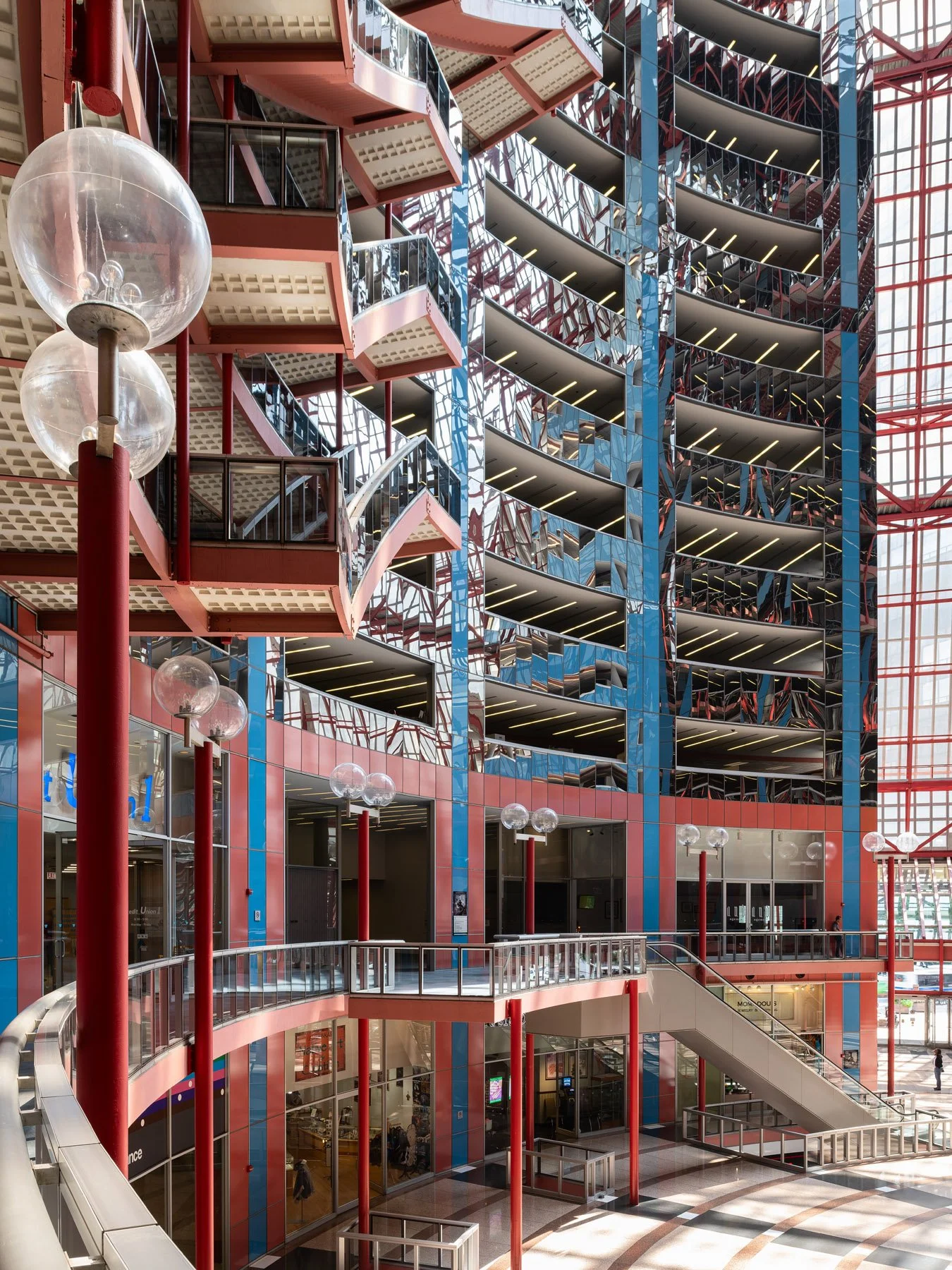
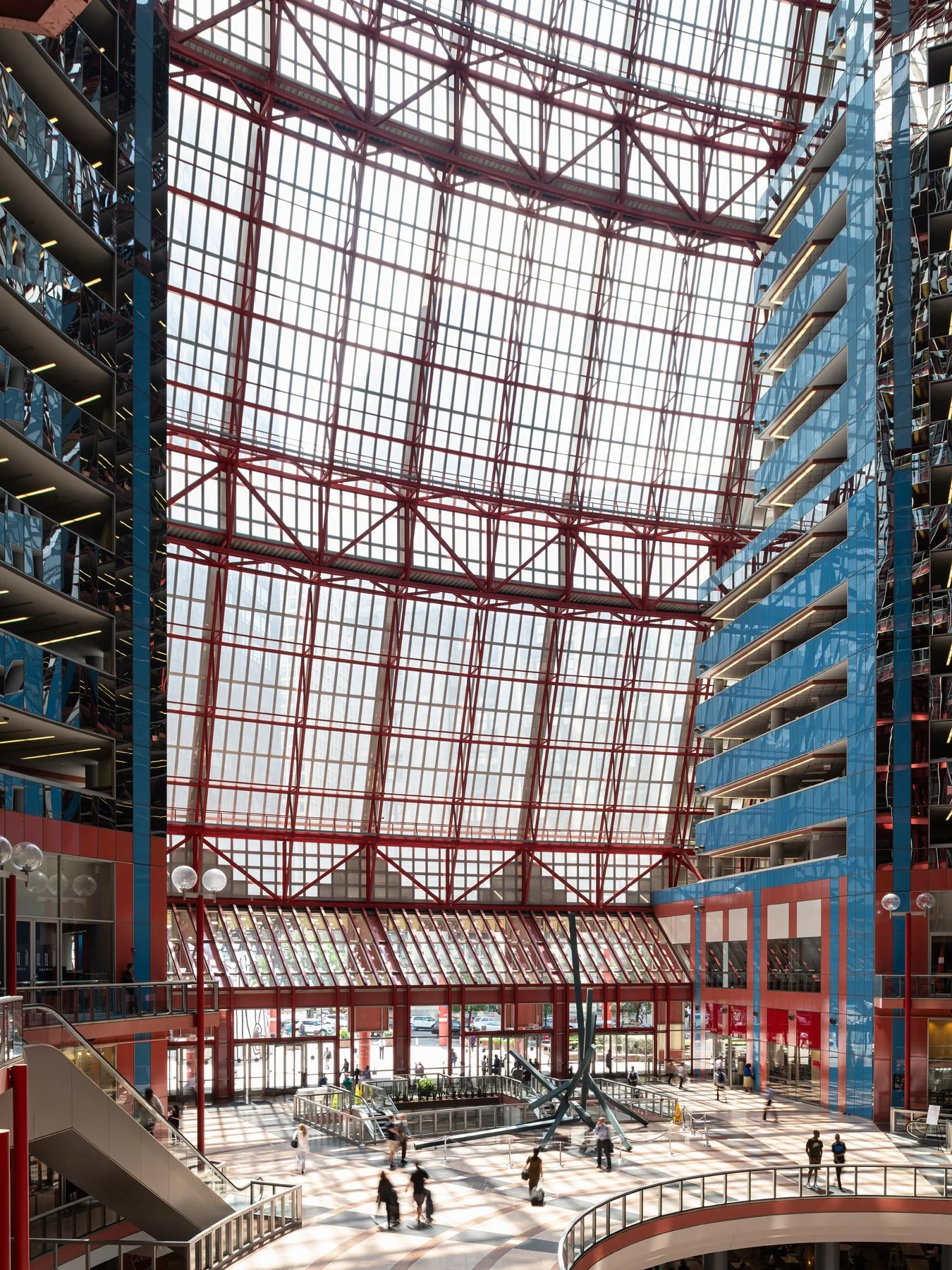
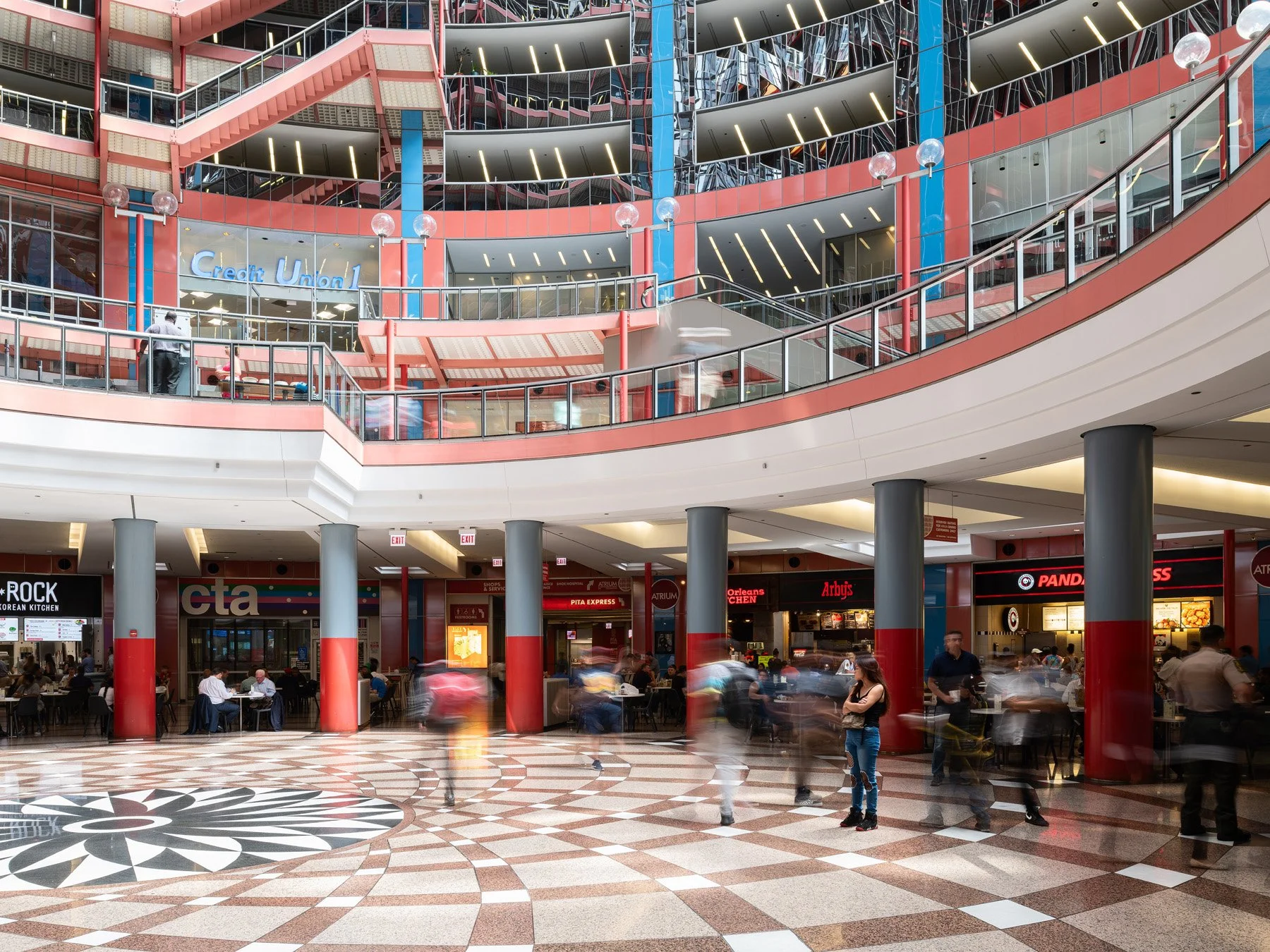
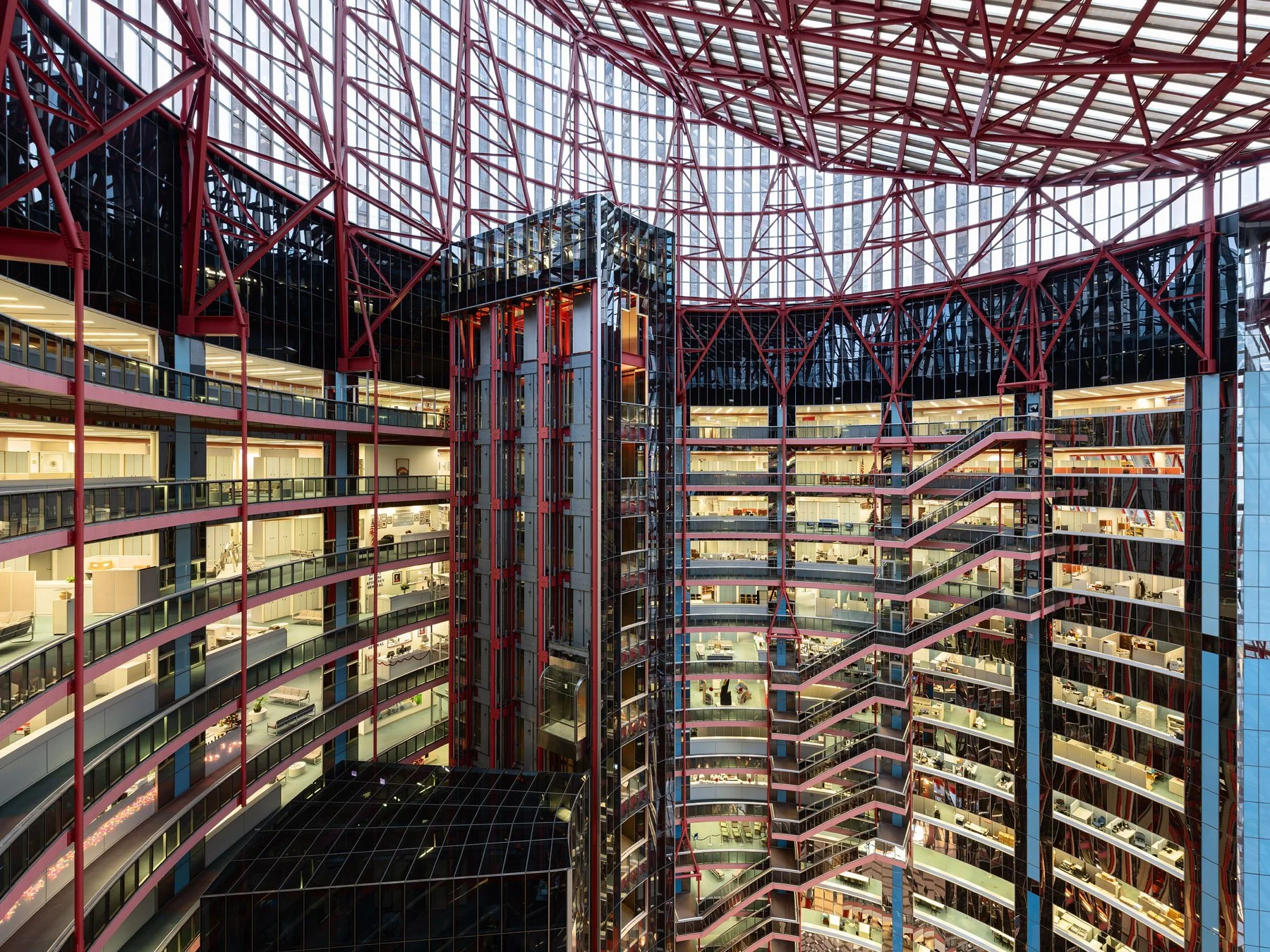
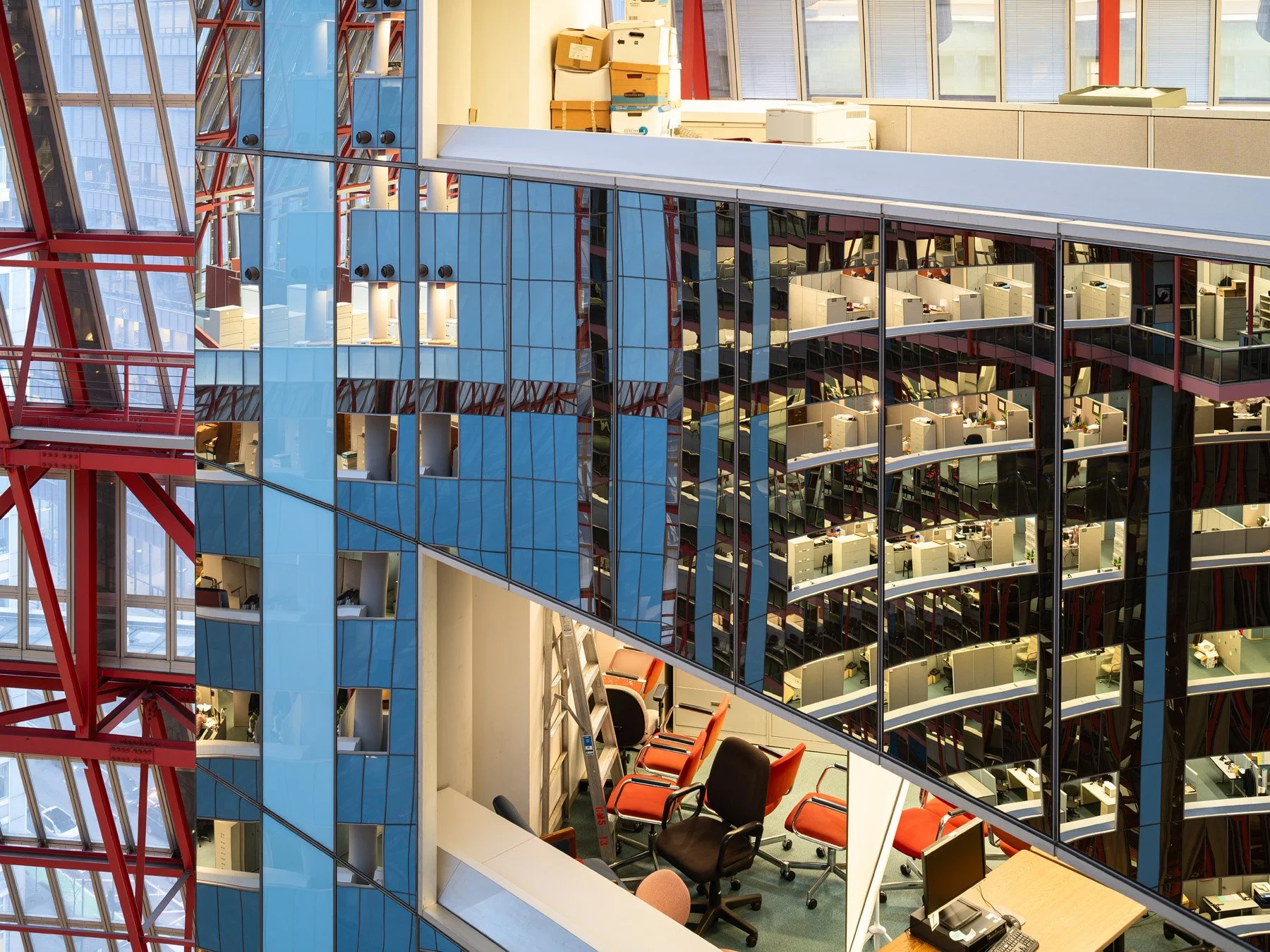
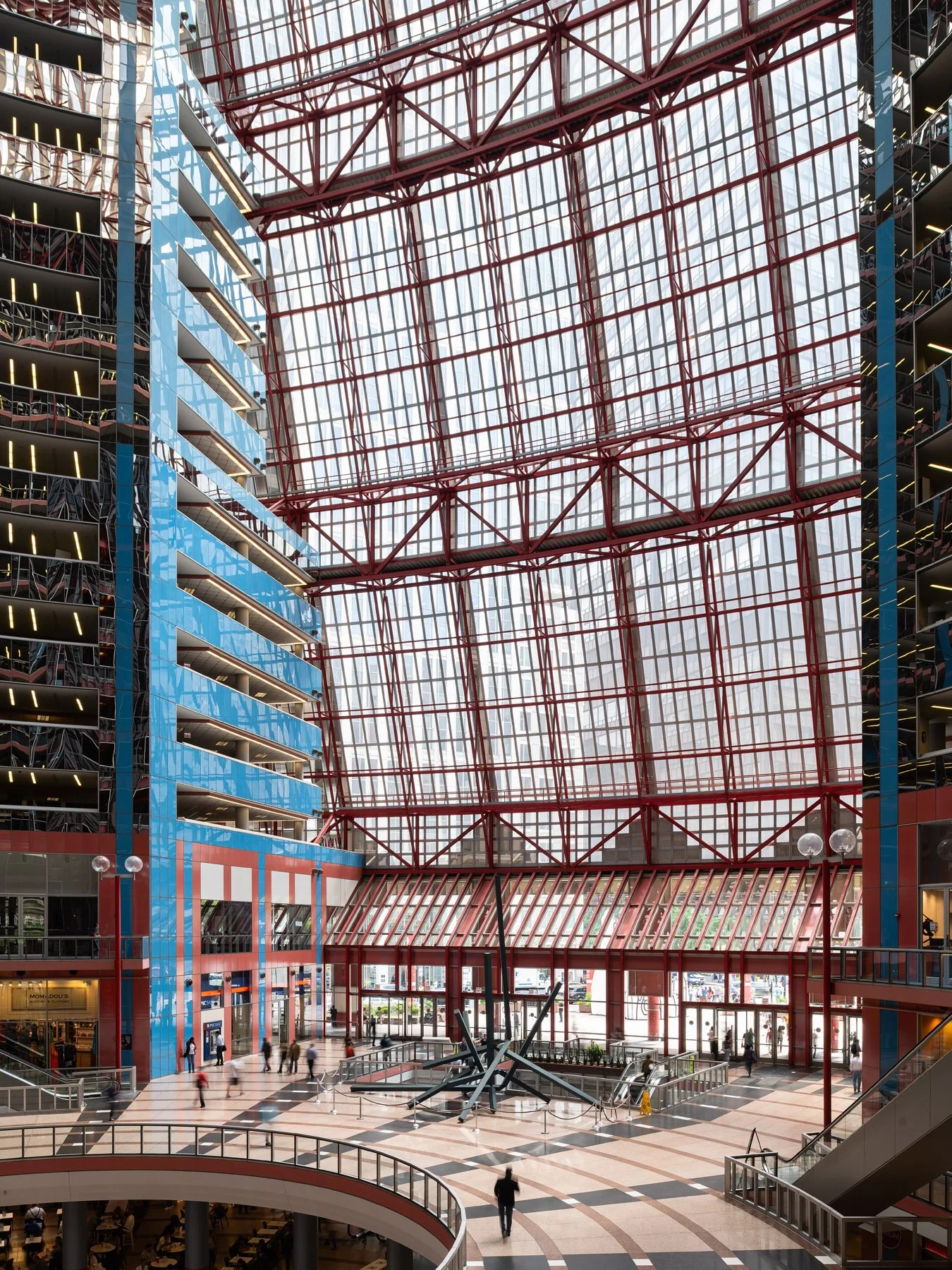
I photographed the interior on two separate occasions. The lower level, main floor, and gallery were publicly accessible. This area included the retail shops and food court. Anyone could photograph here, so I did, on a semi-overcast afternoon in mid-August. The upper floors were another matter. Those I made in the winter, after hours, when the offices had emptied and the building was quiet and more or less mine. At night you'd expect a building like this to go dark and difficult. It was the opposite. Every interior light was on, and since the whole envelope is glass, the building turned into one enormous diffuser lit from within. Soft, even, nothing harsh to fight. The lighting design was so well-handled that I didn't need to think about much other than composition.
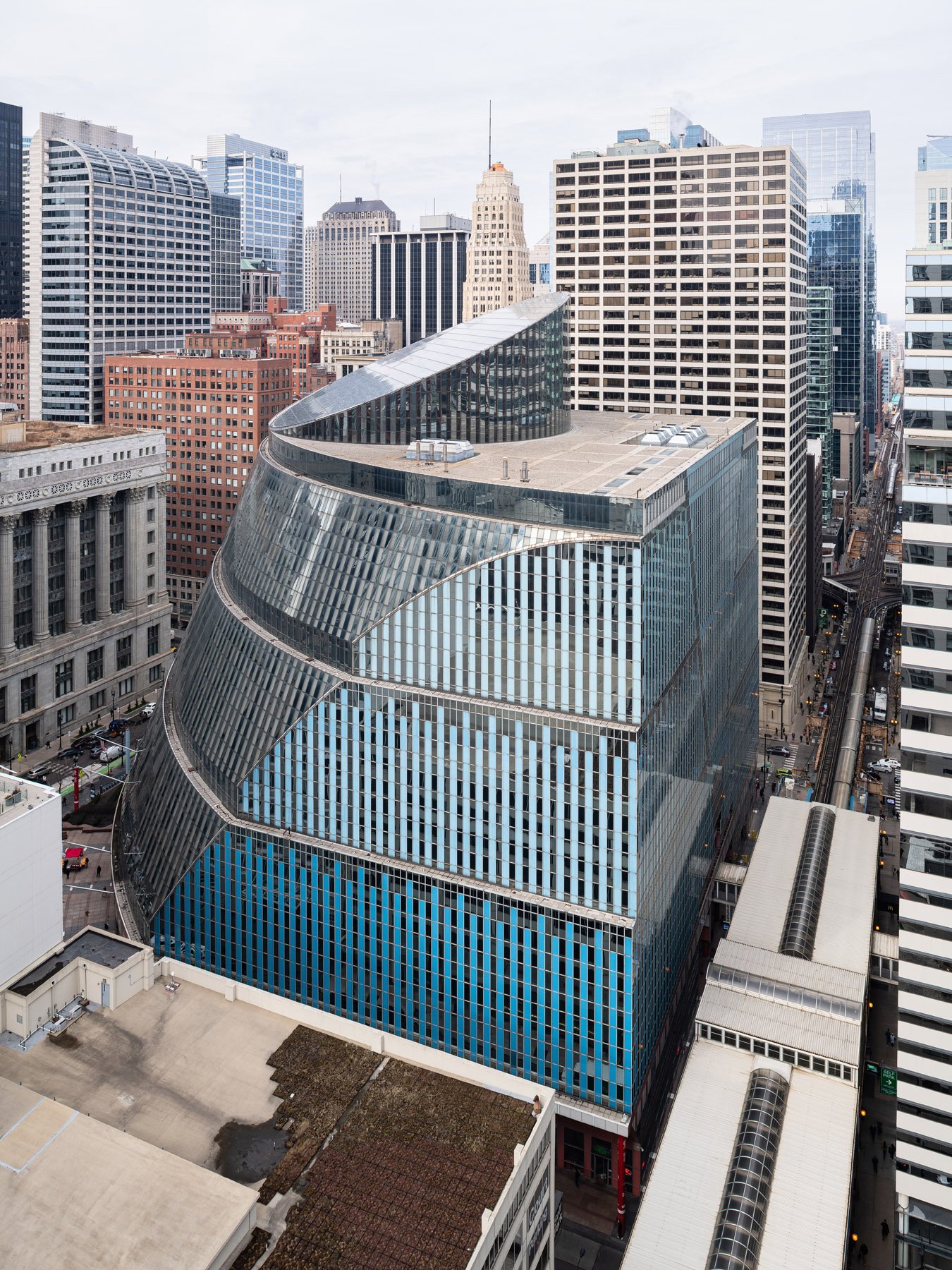
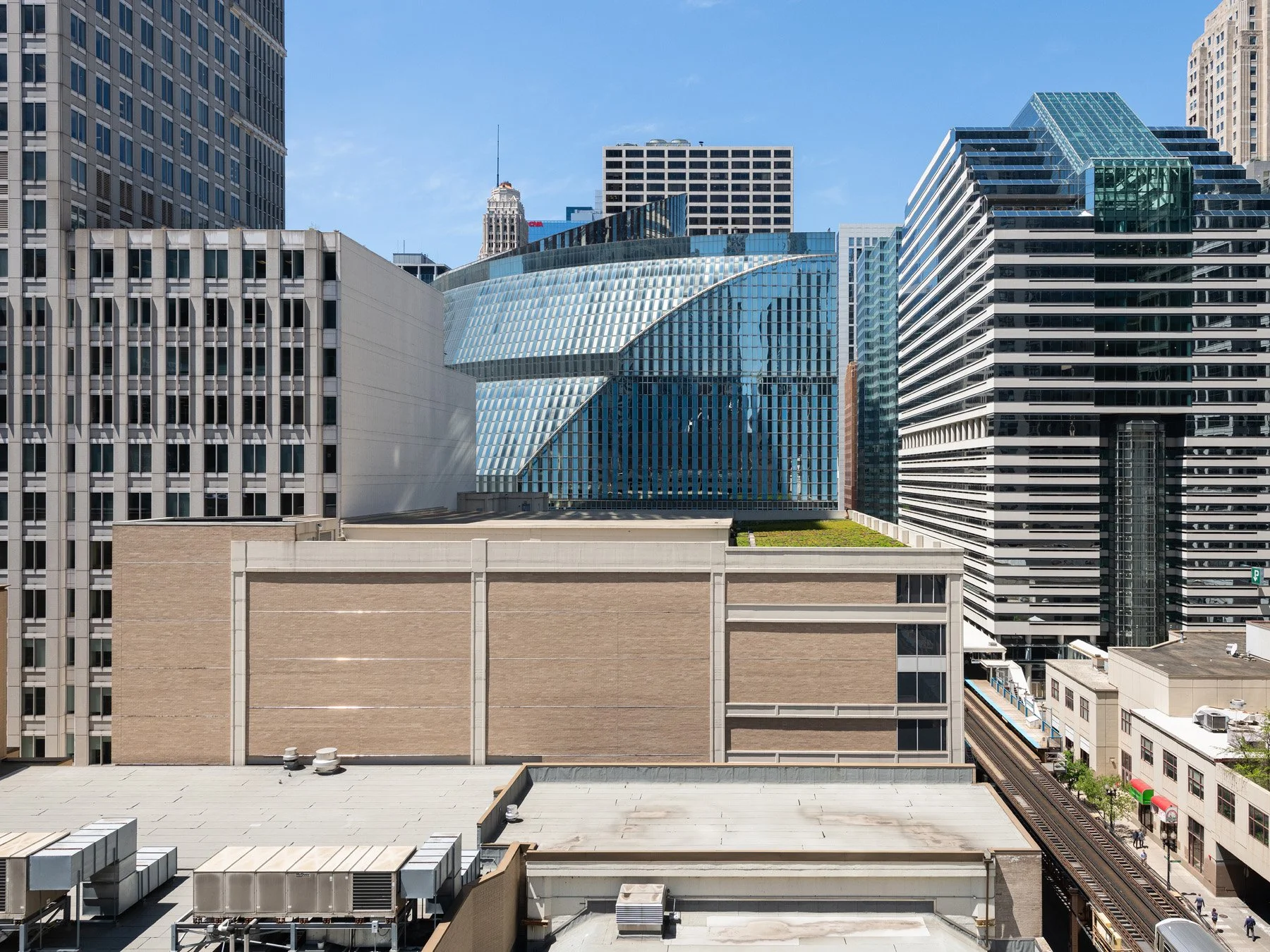
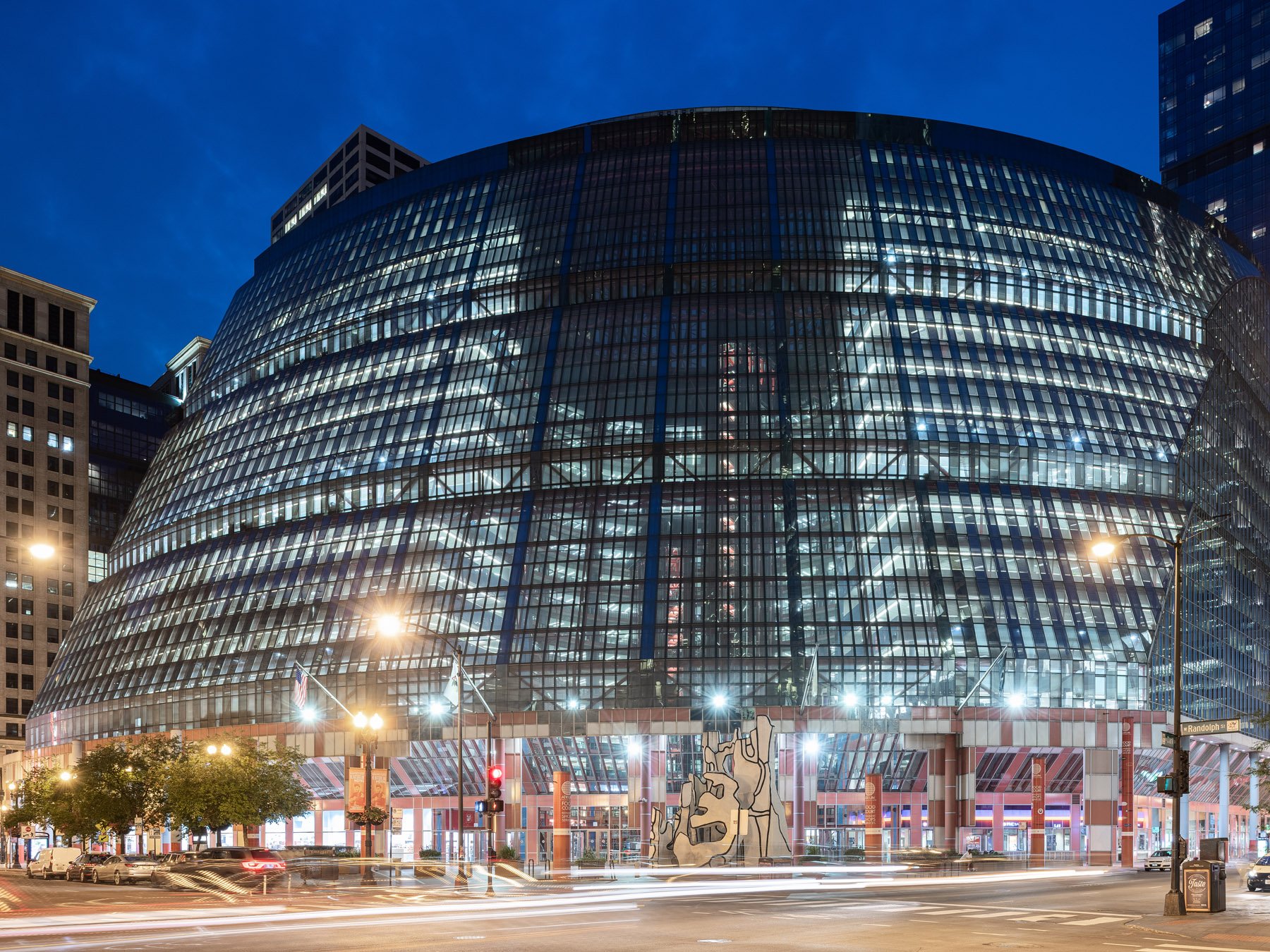
Most of the exteriors are at ground level, but I was on the lookout that year for good vantage points. This was before I owned a drone, so I was in and out of parking garages and nearby buildings. One of them is the obligatory night shot, the curtain wall lit up like a lantern dropped into the Loop. I'm sure I saw this approach in the official 1985 images, but I can't find who shot it then.
There is something about the place that never survives in photos. The Thompson Center was a genuinely public building, in the best kind of way. I don't mean public the way a lobby has unlocked doors, but public the way a great square is public. A civic monument. Helmut Jahn designed it as a surrogate state Capitol, a seat of government with its workings turned inside out for all the public to see. One seventeen-story glass room surrounded by offices, and the people having lunch below.
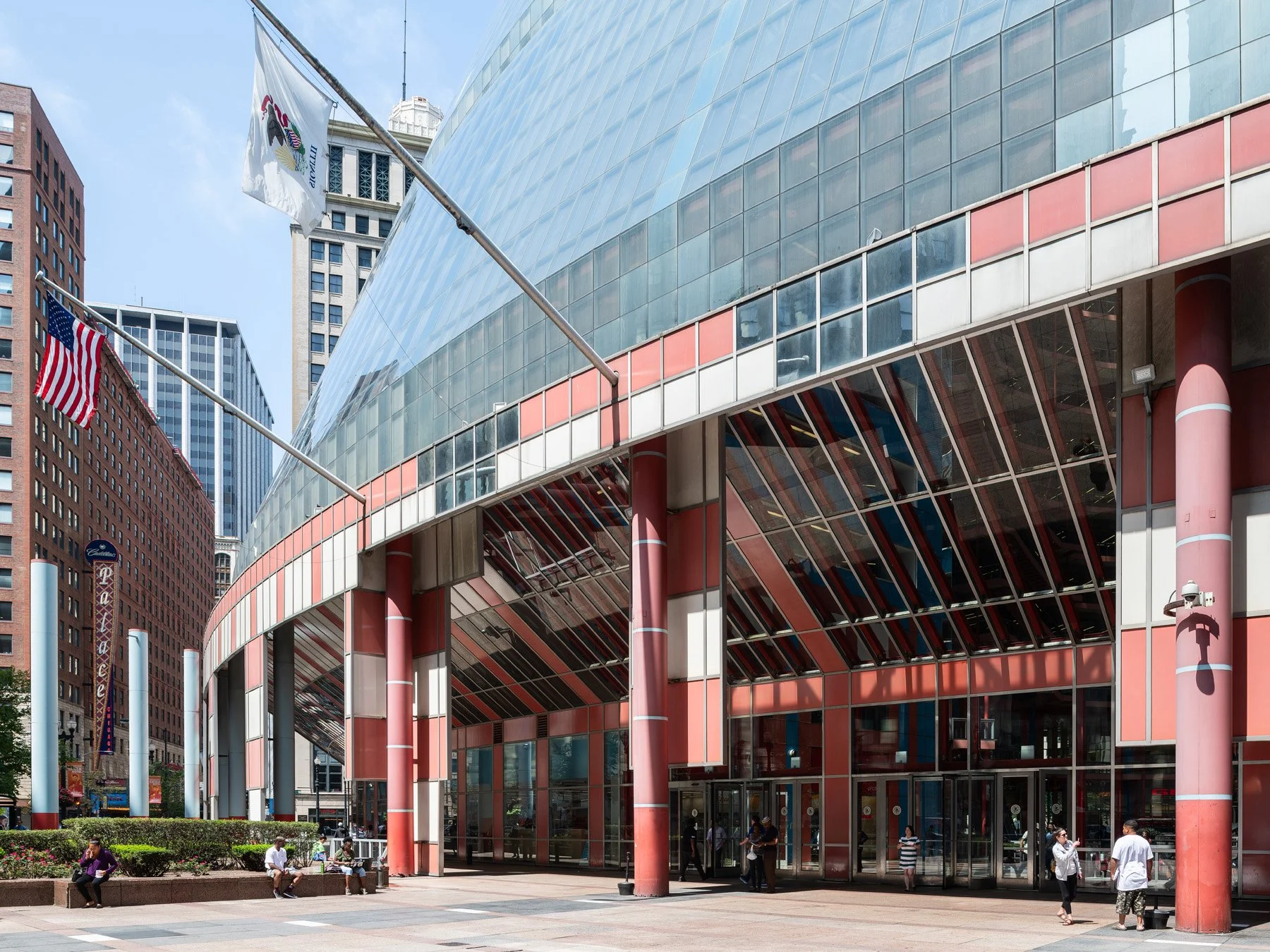
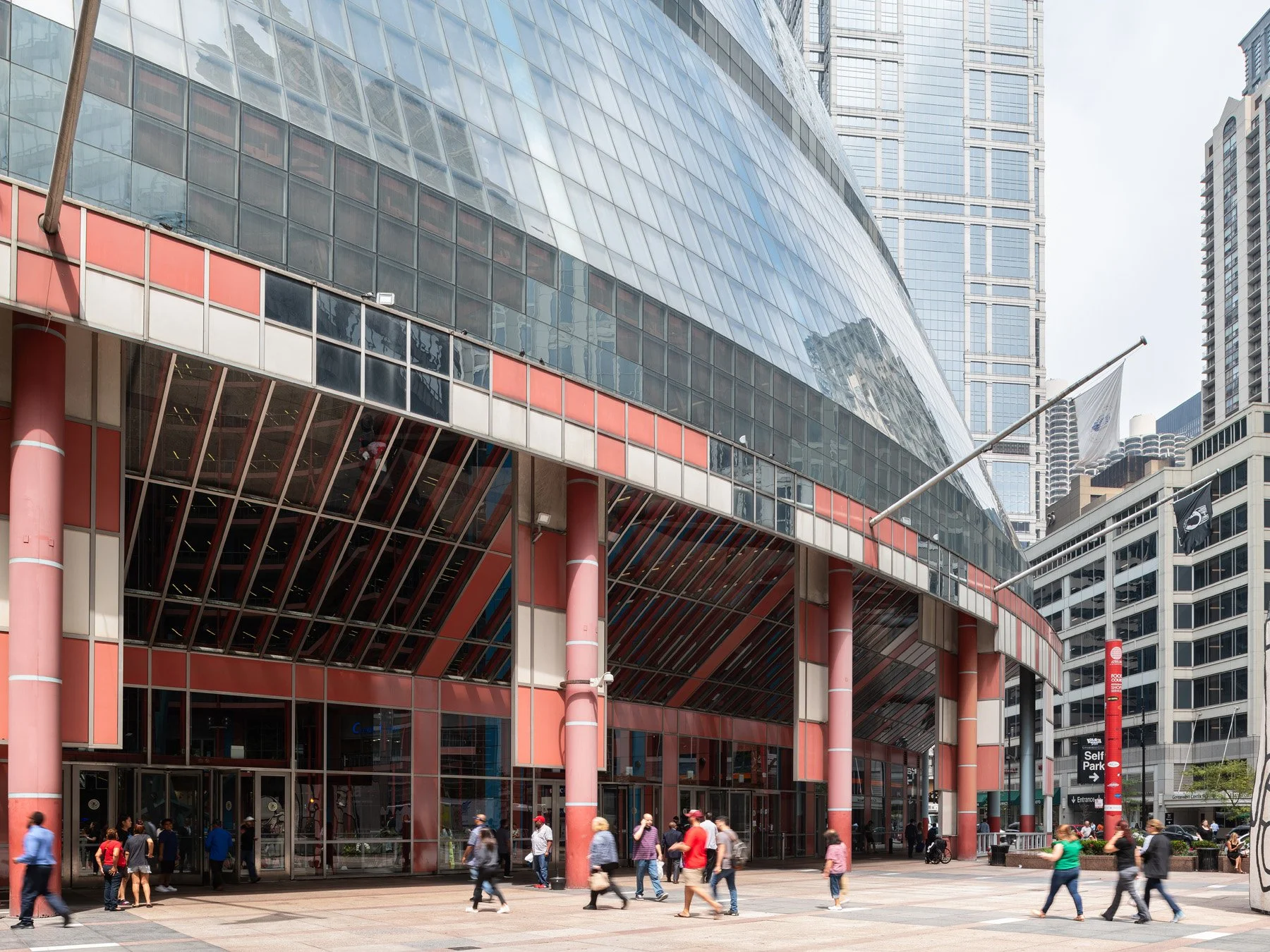
You could enter from street level and it handed you the whole volume at once. Or you came up into it from below, out of the CTA station threaded through the lower levels and past the food court. Out front, you could go through the plaza with a white Dubuffet parked on it. Or through the back next to Dunkin Donuts. However you came in, the flow led you to the same public room.
People held protests there without a permit, because it was public space. They staged concerts in the atrium. Public life was the building's function, more than the offices were. I used to take the train here in high school, and I would come just to be in it. It left a person with the distinct impression that it was, in some way, for you. Most architecture tells you it wants to be a civic hub and never delivers. The Thompson Center was a trial run for the Sony Center in Berlin, where he worked the same ideas up to an ecstatic conclusion.
This building was considerate, populist architectural spectacle. Jahn was very good in that mode. He didn't make boring buildings for boring cities, nor was he boring himself. You could see it in his wide-brimmed Panama hats and flash suits: vivacity ran through everything he touched. The organization of space, the materials, the colors — bold was his default.
It was a building that rewarded looking. There is a kind of visual composition I'm always on the lookout for, I call it axial composition. It's just a frame divided in half and in thirds at the same time. Two registers of looking in the same frame, visual polymetry, the way a musician plays three over four.
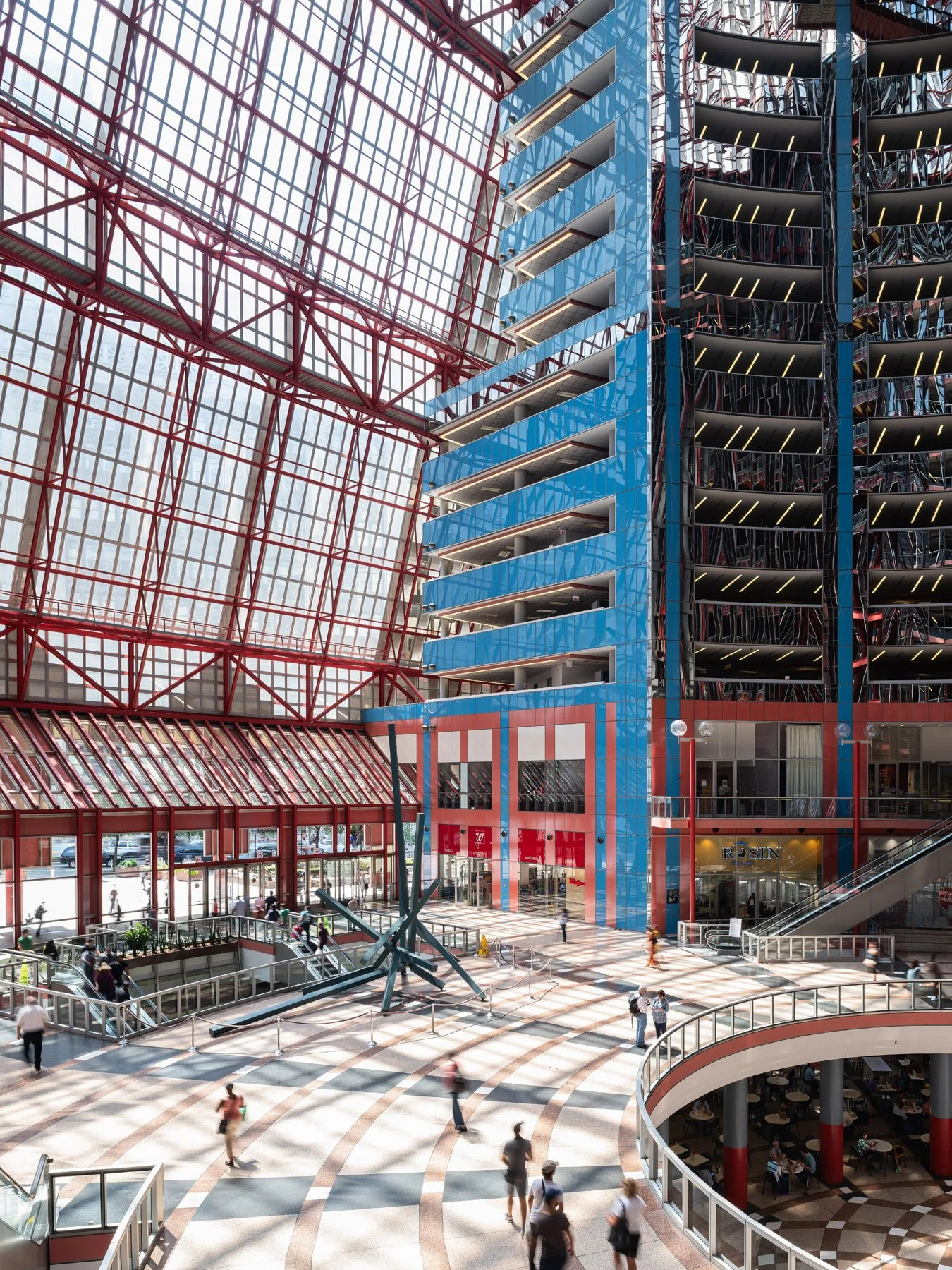
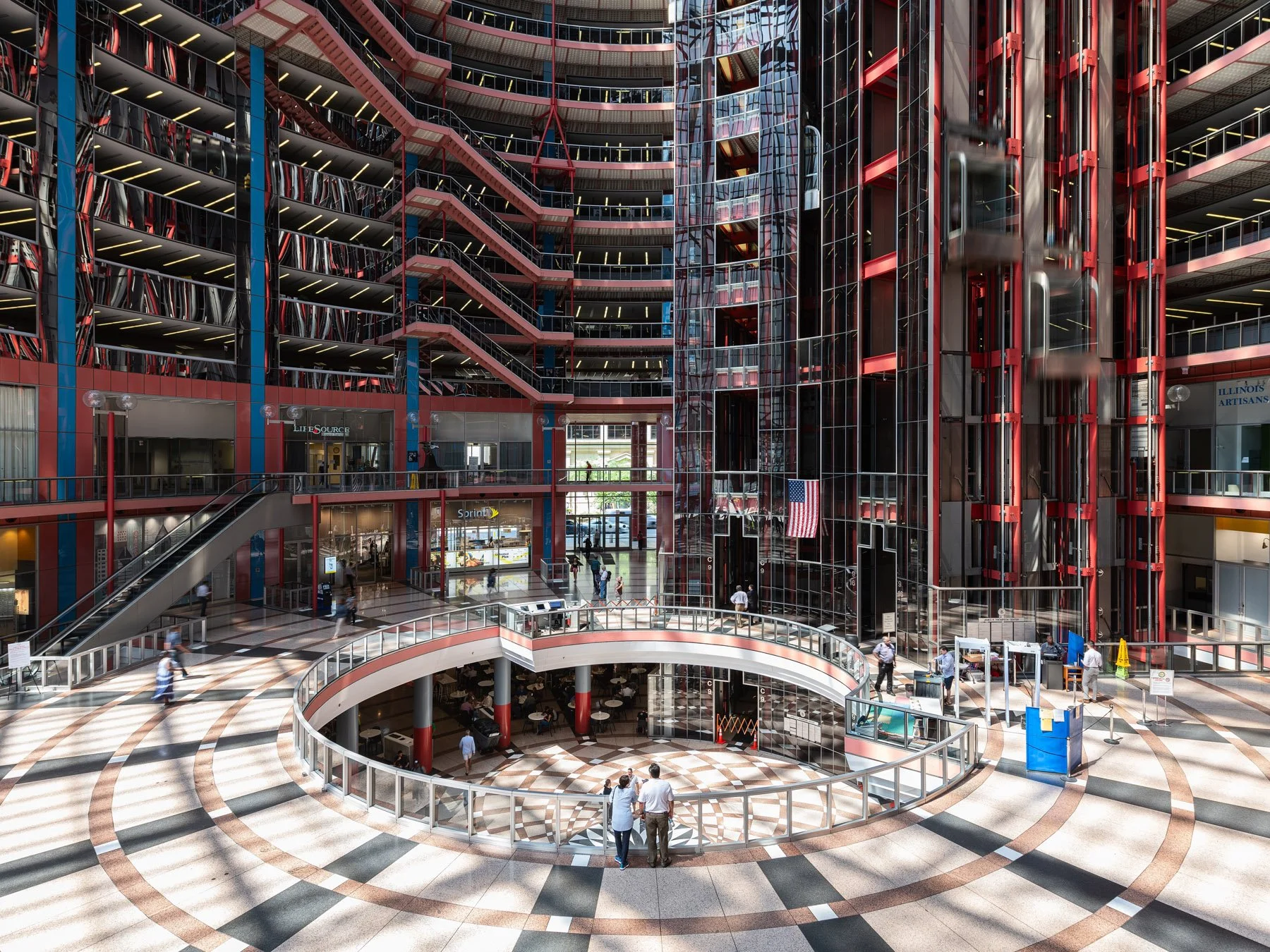
In lesser architecture it is difficult to find visual elements to stack, arrange, and compress. The Thompson Center handed them over from almost anywhere you stood. It was a building of competing geometries and opposing forces. The curved curtain wall against the squared-off floors. The concentric rings of offices against the radial pattern in the floor. The rectangular elevator box in a building of all curves. From most vantage points inside, two of those systems were evident inside the same frame.
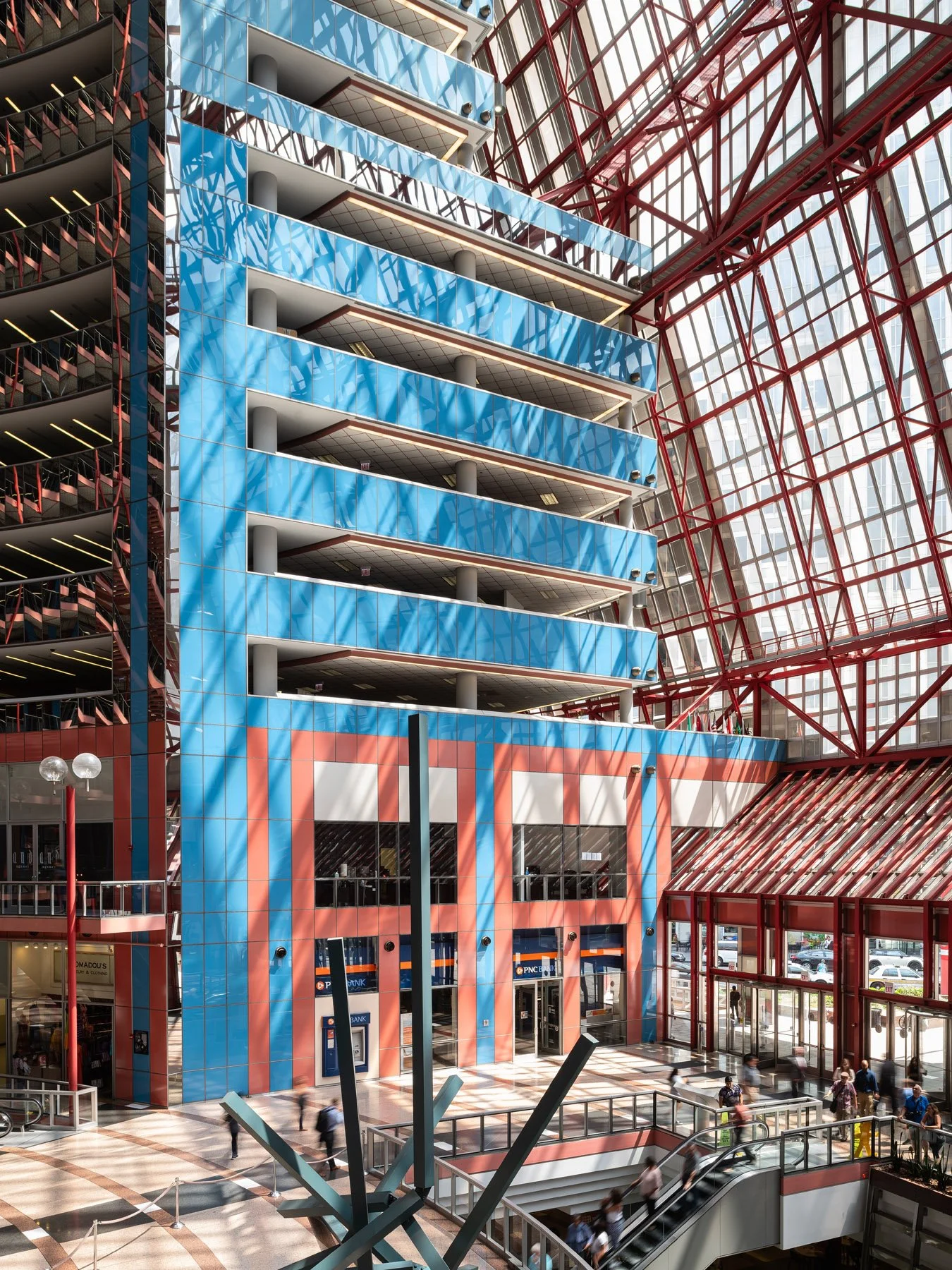
The light helped. It didn't pour through the oculus like you might expect. In Chicago, the sun is straight overhead for only a couple hours a day, and only a few months a year. Most of the time it came in at an angle through the south-facing side. My favorite of the daytime interior frames, looking south from the second floor, is from that half-overcast afternoon. It's the kind of day that's great for interiors and terrible for exteriors. I usually try to avoid shooting into light sources like this, but the glass wall acted as a giant softbox, and the light came out almost magical.
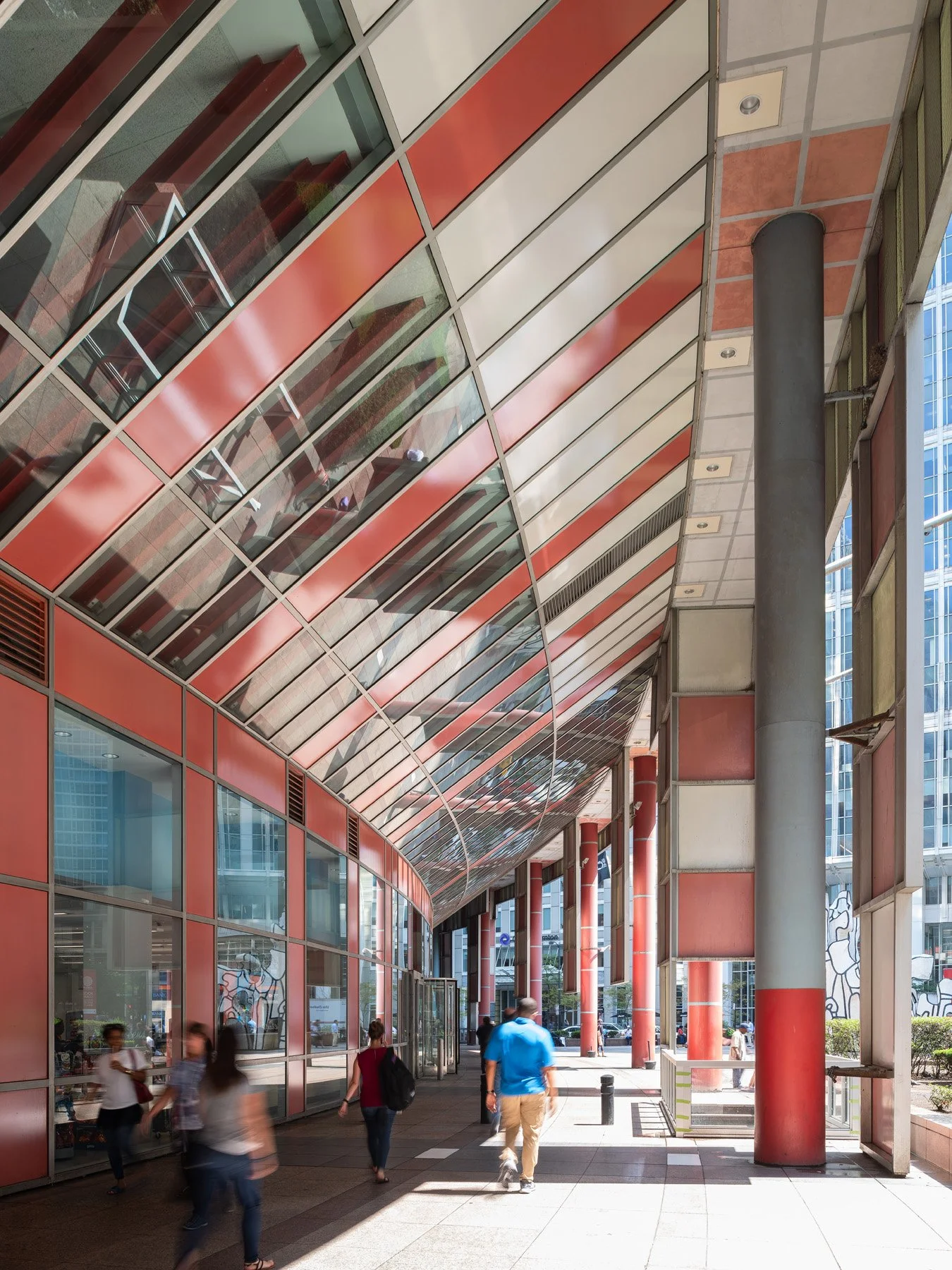
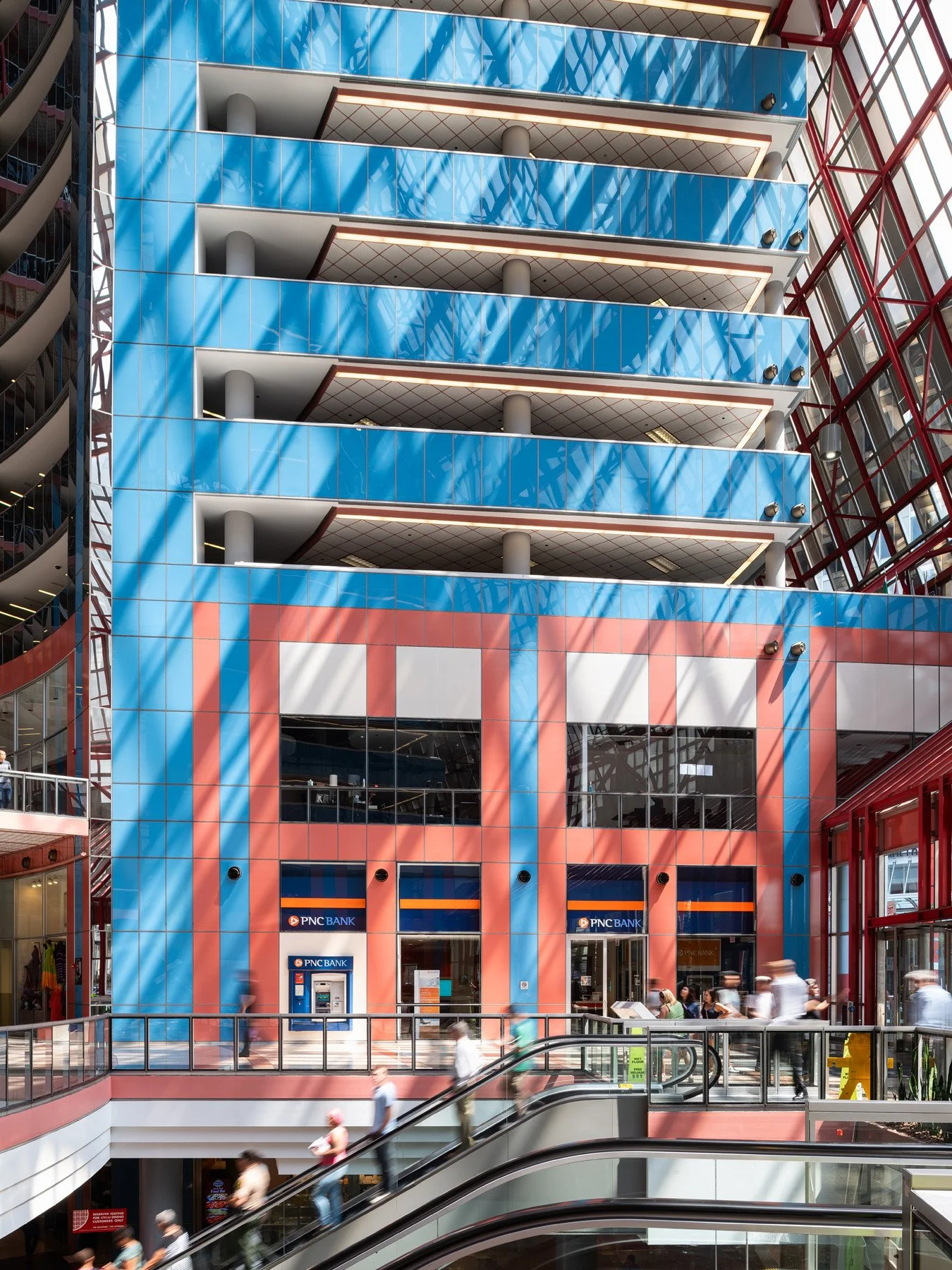
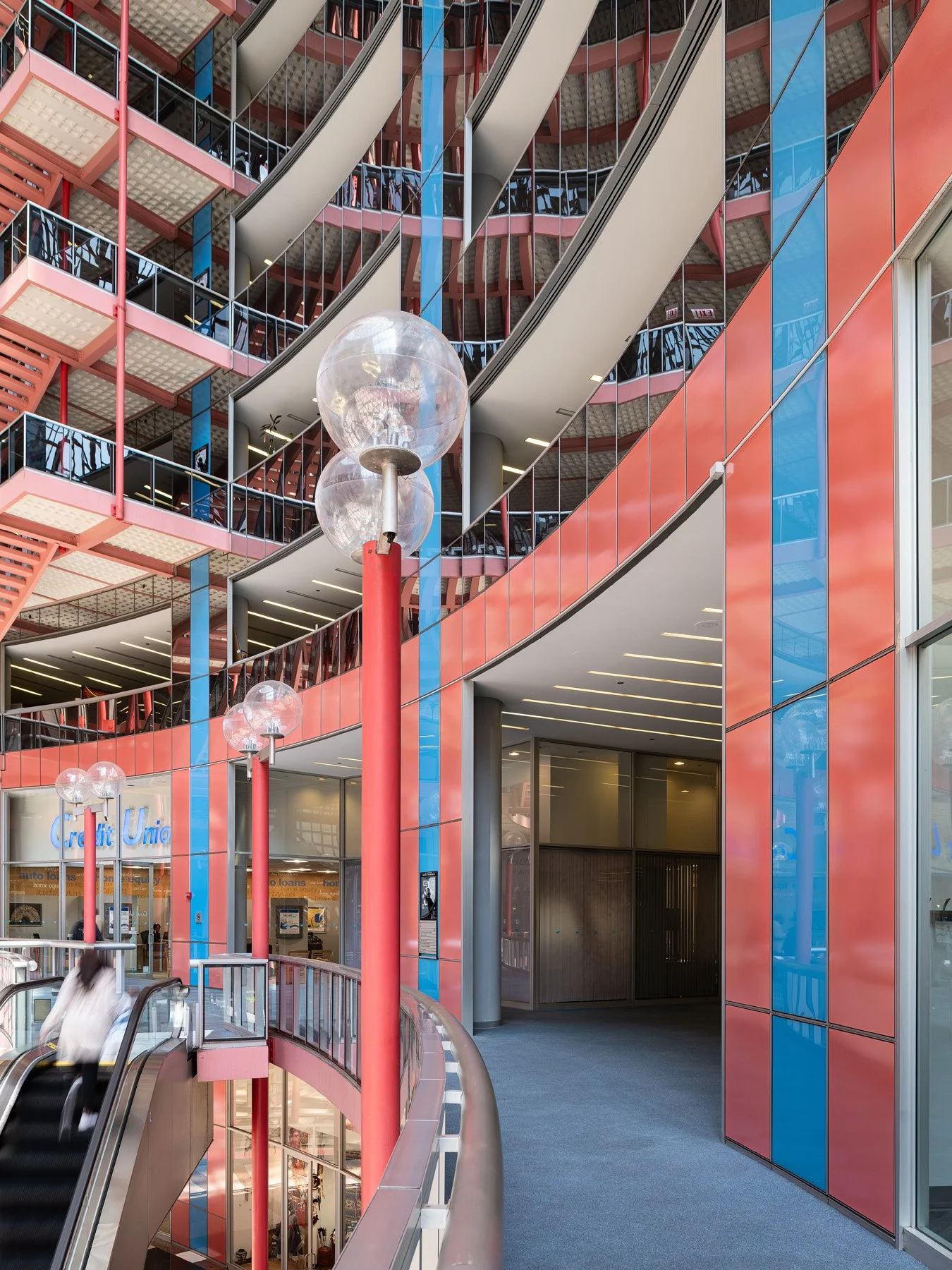
The color of the building drew a lot of attention. Ward Miller memorably said that it made the building "sing and pop." The color, for me, didn't dominate the formal elements. The shapes and forms, the positive and negative space — those grab the attention. The salmon and blue sat on top of them like mirror glaze, a thin coating but not the substance.
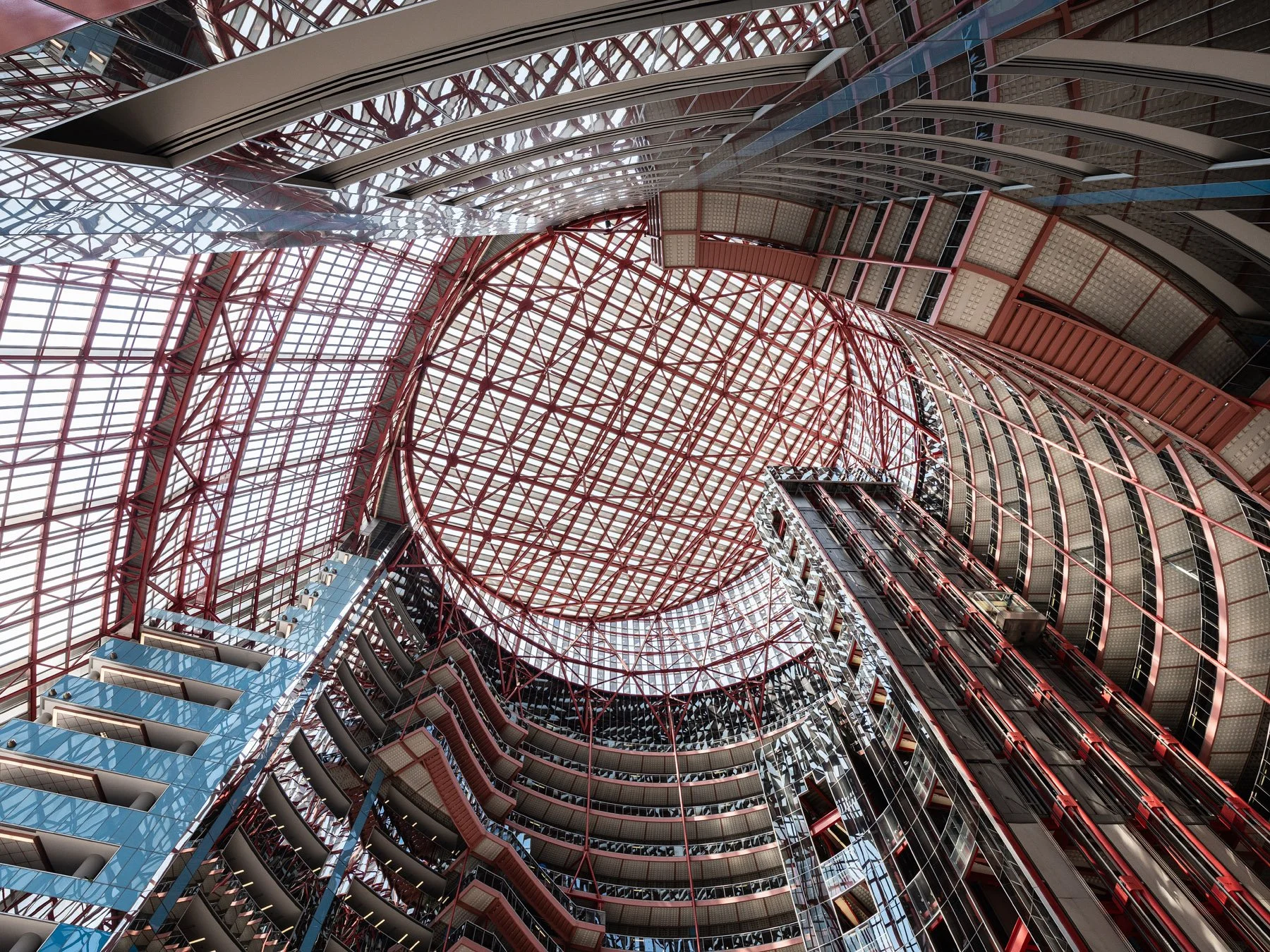
There is one frame I haven't seen from other people, the long 45 degree lookdown from the top floor to the lower court. Everyone has a mediocre photo looking up into the oculus. I have it too. The look down required access to a restricted area, so it's a much less common view.
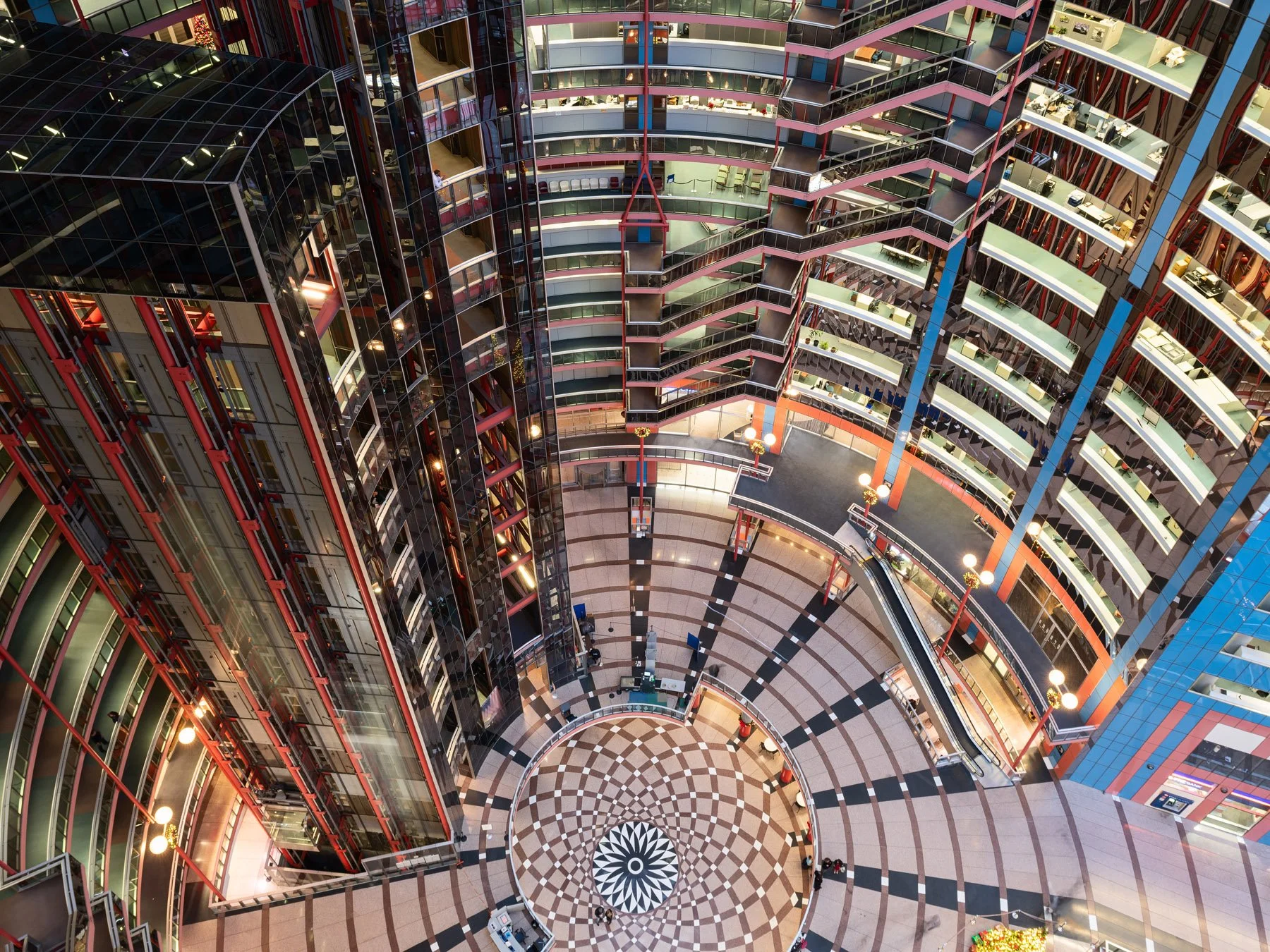
I made it using a 12mm lens, the camera held a few feet out past a handrail above a seventeen-story drop. I definitely had to double check the mount on that one. What the view aims at, at the bottom, is a rosette and radial pattern set into the floor. It's an inverted dome, a reference to that of the old Chicago Federal Building, demolished in 1965. So the rarest picture I have of this changing building depicts a tribute to a building Chicago lost a generation prior.
Loss seems to haunt that corner. The Thompson Center sits on the footprint of the Sherman House. A now-demolished seventeen-hundred-room hotel in the center of a once-thriving theater district. Only a handful of theaters remain in the vicinity. So the site has a history of grand things arriving and vanishing. Jahn addressed it with an inverted dome that quoted a demolished one. The building was, among other things, a quiet memorial.
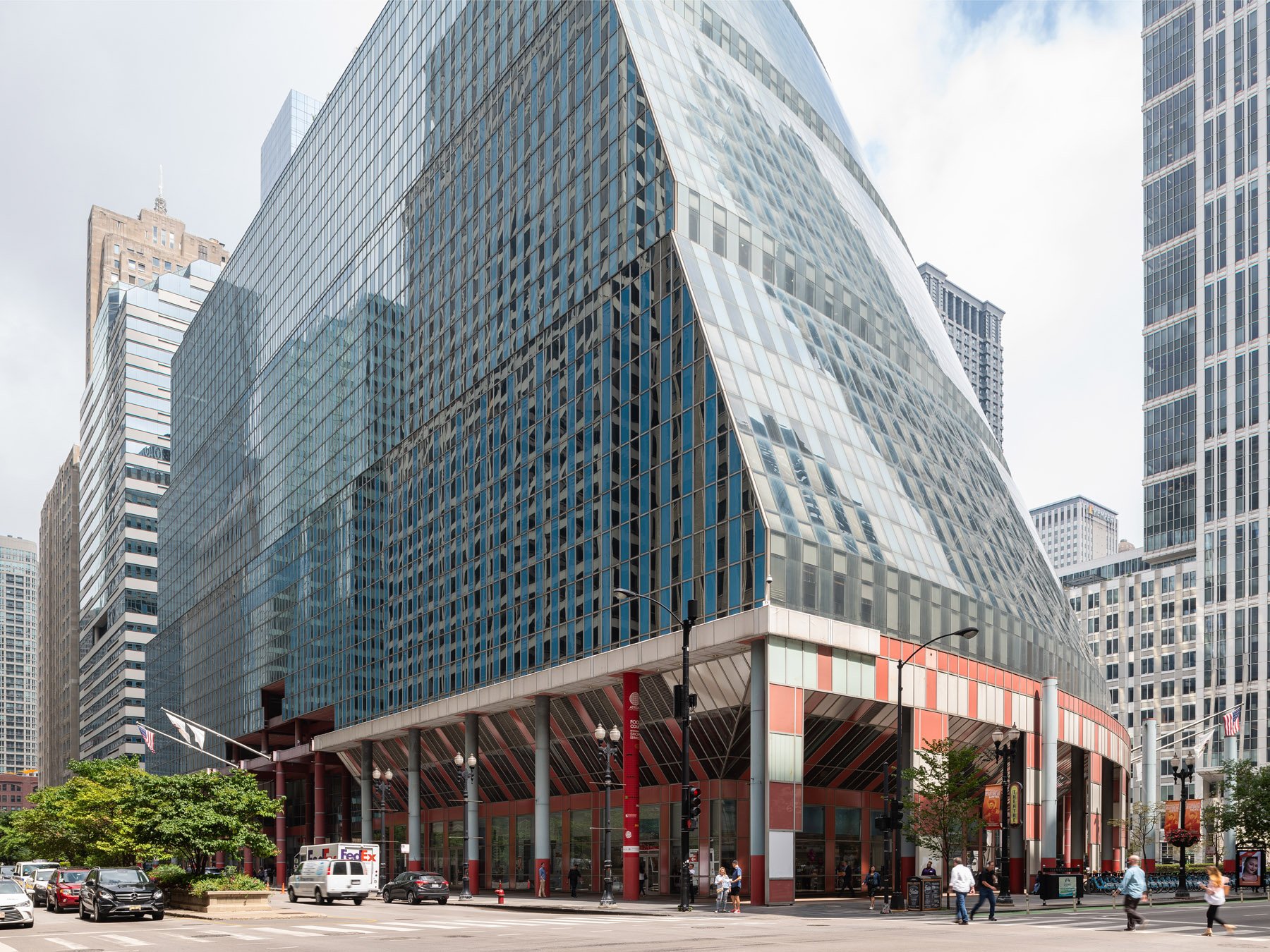
I can't account for why anyone had negative words for this building. I can't squint and force myself to see it as ugly. It was an astonishing object, and it's a shame for anyone who couldn't see even a little of that. Even those who admired it took shots. Paul Goldberger, reviewing it for the Times the year it opened, called it "architecture on amphetamines." There is a shred of a compliment in there, I think.
Some complaints weren't baseless. The mechanical systems were faulty, and general maintenance was deferred for years. It began to look weary rather than exuberant. A granite panel detached from the arcade in 2009 and the cladding came off the columns after. But you can have great architecture and middling engineering. You can call it inefficient — a vast open atrium that earns no rent as office space — and you'd have a point.
But doesn't awe have a function? Doesn't civic pride have a function? Is the ineffable too inefficient to be worth something in a public space? For a long time the consensus answer leaned toward no — toward a sale, and then toward the wrecking ball. And then the people who had a hand in saving it chose to keep that grand room open rather than convert it to floor space. Maybe awe does have a function, because someone decided it was worth paying for.
That decision took years of advocacy. Ward Miller and Preservation Chicago made the case in public; Elizabeth Blasius, Jonathan Solomon, and AJ LaTrace built the scholarly and editorial one; and Helmut Jahn defended the building to the end of his life. The firm that carries his name, now led by his son, is retrofitting it for the next phase.
But the building and I are still the same age. Now it's becoming something else, and in slower more ordinary ways, so am I. I don't want to get off at Clark and Lake and go back to the Thompson Center as it was. But I would like to photograph it again when it's completed, as we both embark on our second acts.