
Case Study: St. Charles Fire Stations No. 2 & 3
The city of St. Charles, Missouri replaced two outmoded fire stations with two contemporary ones designed by JEMA, which were completed in 2024 following voter approval. The previous stations dated back to the mid-1960s, and had numerous structural and safety issues, including flooding problems and electrical hazards. The outdated facilities also lacked the space to accommodate modern firefighting equipment and additional staff.
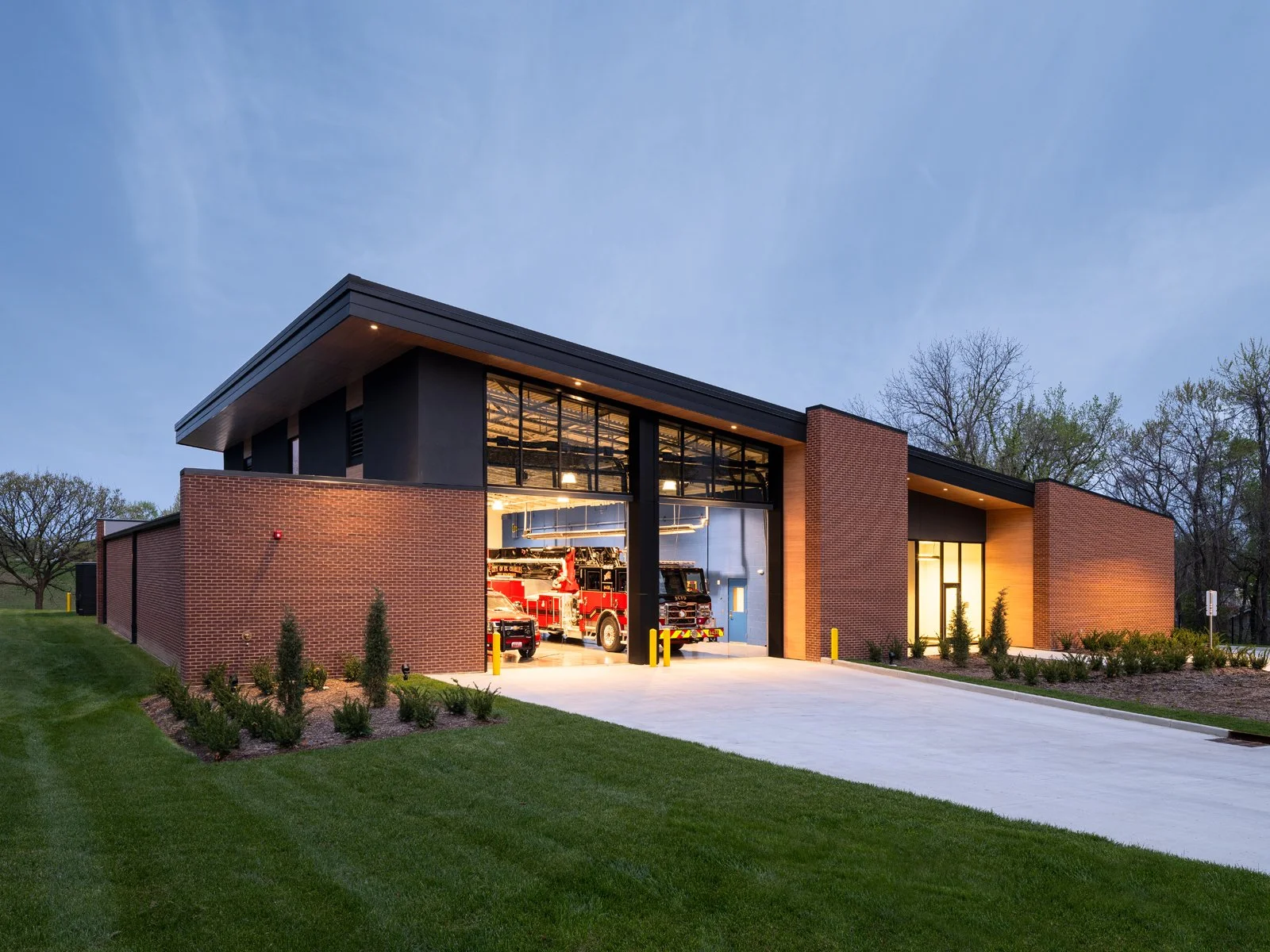
Dawn exterior, Station No.3
Both stations were built from a prototype developed for the city, which accounts for their similar program and aesthetic. The differences between them reflect their sites. Fire Station No. 3, on the north end of town, was constrained by its lot and built with two drive-through bays rather than three. Its mid-century modern-influenced exterior fits naturally into a neighborhood of similar vintage. Individual bunk rooms for three shifts, offices, and a kitchen and dining facility complete the layout.
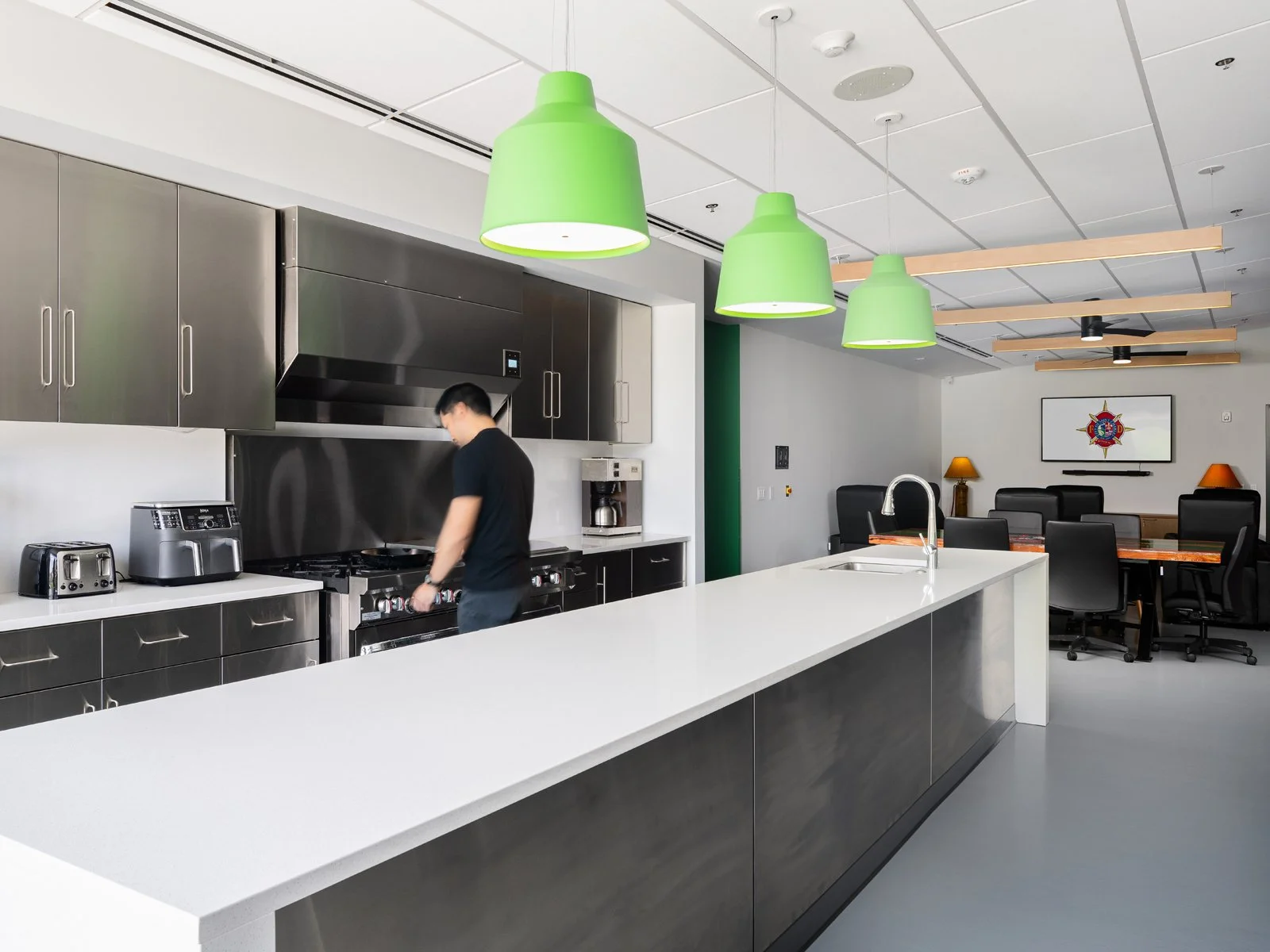
Kitchen and dining area, Station No. 2
Fire Station No. 2, the city's busiest station, sits on the south end of town on land that was formerly the St. Charles Golf Club, redeveloped into a suburban subdivision in the mid-2000s. At 9,400 square feet, it is larger than its sister station, with three drive-through bays, living quarters with bunk rooms, offices, and a kitchen and dining area. The mid-century modern exterior is a deliberate design choice in a neighborhood that doesn't quite match it, though ranch houses to the north provide some context. The station received the 2025 F.I.E.R.O. Honors Award, the organization's highest recognition for innovation and excellence in fire service design.
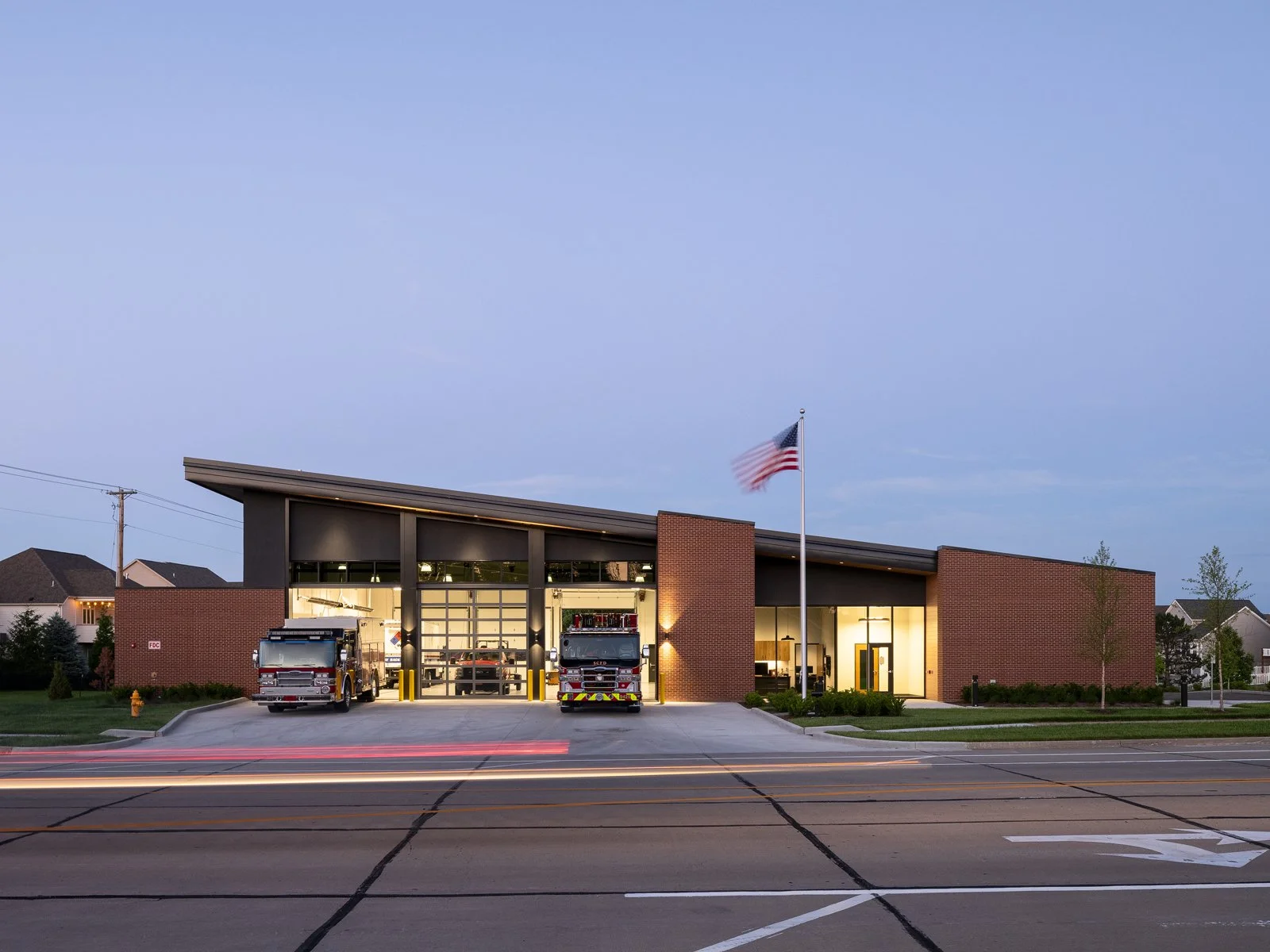
Dusk exterior, Station No. 2
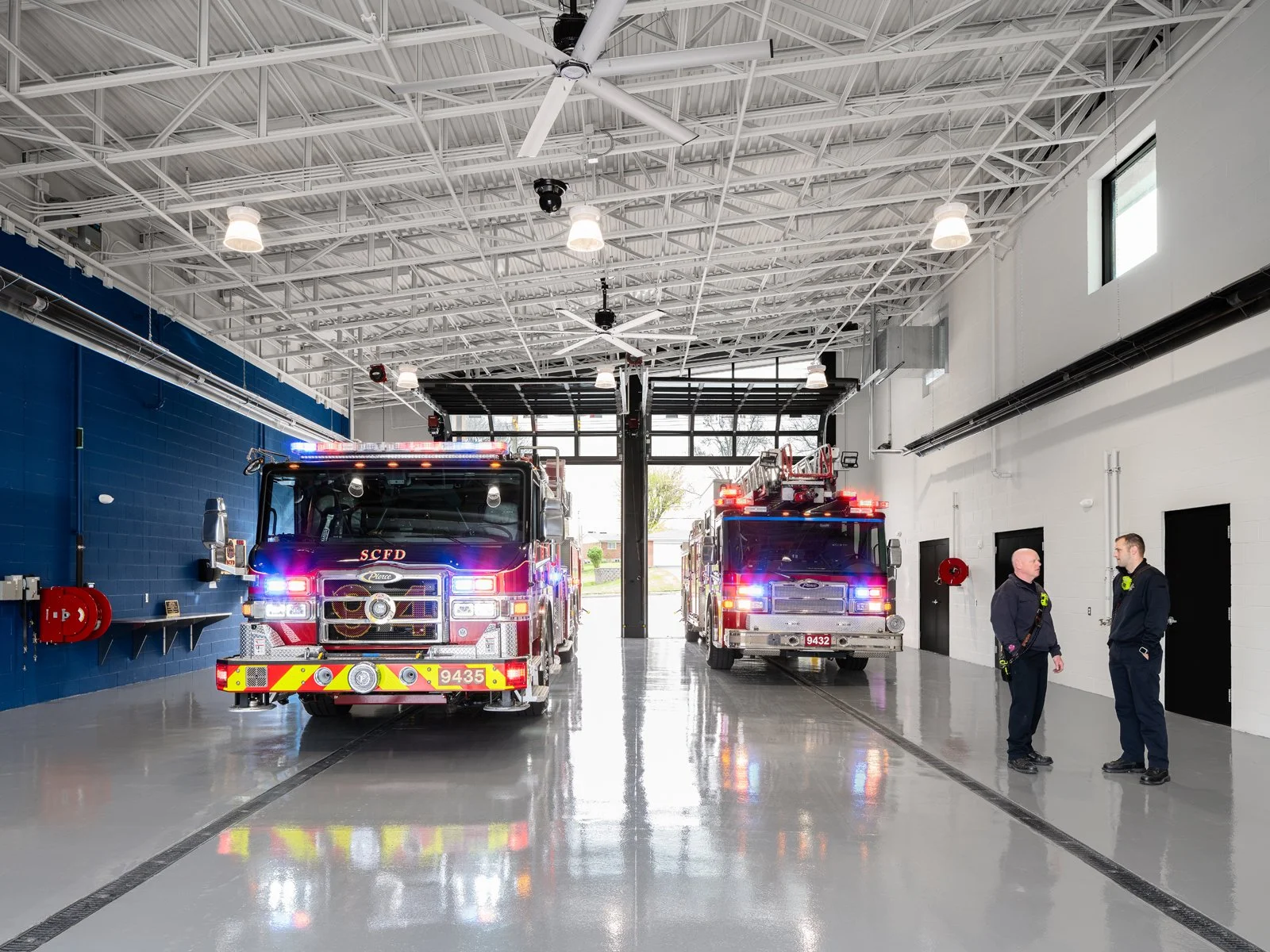
Two-truck bay, Station No. 3
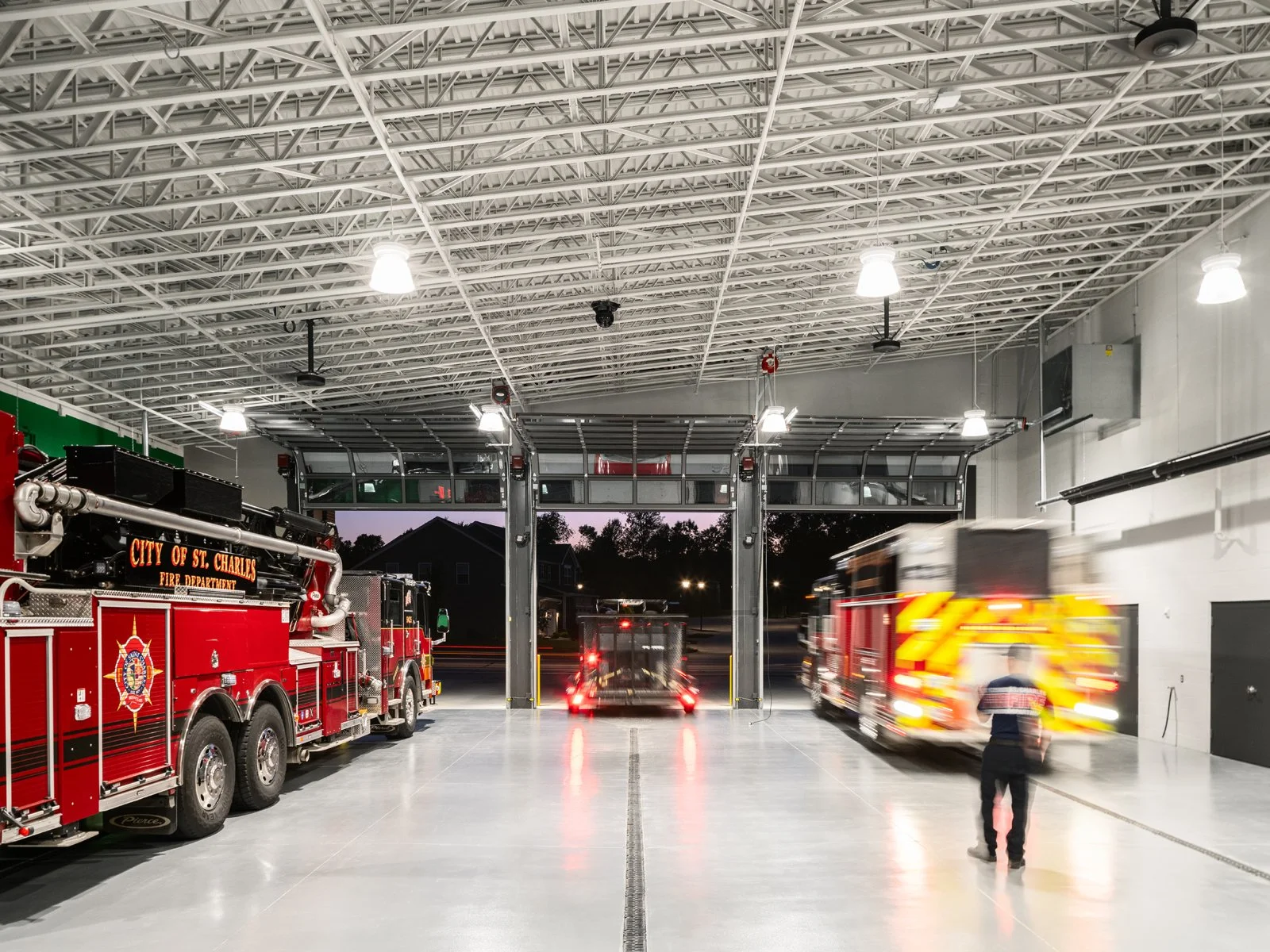
Three-truck bay, Station No. 2
Since both stations are essentially the same design, the approach to photographing them was similar. Shoots were split into two sessions over a single day. Using the renderings as a starting point, exteriors were scouted prior to shooting and tentative shot lists were worked out. Based on their cardinal orientations, priority was given to dawn magic hour for Station No. 3, and dusk magic hour for Station No. 2. Interiors were photographed in the mornings. Firefighters from both stations had been told in advance that models would be needed, and while participation was informal and voluntary, they were without exception easy to work with — stepping naturally into the truck bays, kitchens, and fitness rooms without much direction. Finally, the bay at Station No. 2 was photographed after sunset to provide a contrasting look to the day shot at Station No. 3.
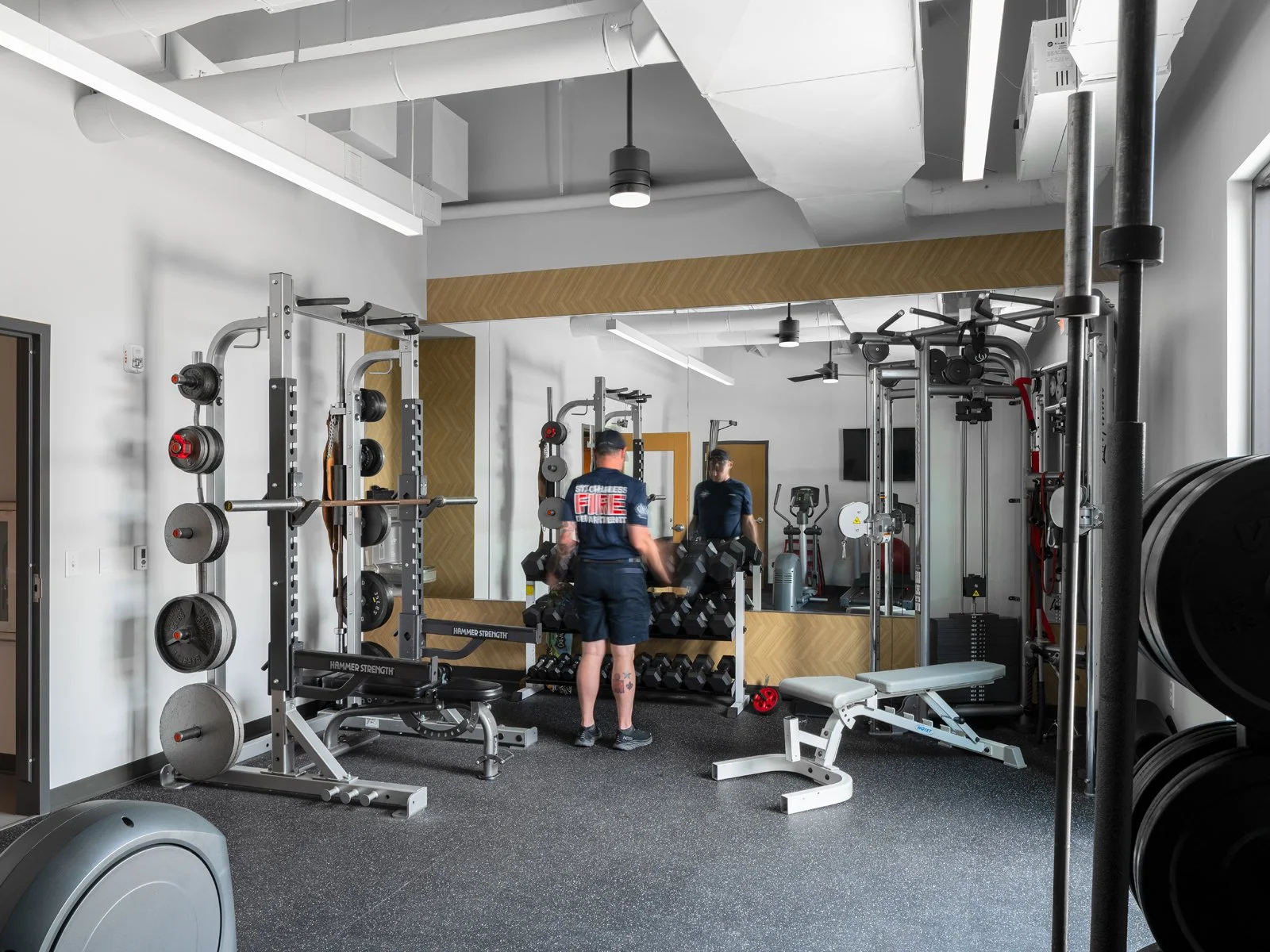
Fitness room, Station No. 2